


Horror Stories of 1,000 Words or Less
For the month of June 2026, these are
the stories that entertain us most
* Cursed Concealer by Emily A. Davis
* Sweet Adeline by Meghan Haydon
* Sever by T.I. Wooden
* Glass and Moonlight by DJ Tyrer
* We Don't Shoot the Rabbits by Aza Smith
* Stick Insects by Irene Cantizano Bescós
* Emergency Alert by Jacob Seybert
* The Collection by J. Penberth Rabold
* Scorned by Kaitlyn Downing
* How to Teach Your Son to Drive by Adam Frost-Venrick
* Auntie by Ann Thorrson
* Reclaim by Jacob Storey-Smith
* Fat Guy in a G-String by Alex Jewell
* The Phone Calls by Paul Carro
* Frayed Ends by Barb DeMoney
* Thoughts for Eternity - The Fate of the JEN-355-A by Cecilia Maeve
* A Bite by Eric Silverman
* The Fall/Winter Collection by Beau Wilks
* World of the Visible by Aishwarya Srivastava
* Coins Behind the Gate by Hanlie Grobbelaar
* Between Terce and Prime by D.C. Froburg
* Porcupine by Anna Dodson
* The Unexpected Package by Edward Moore
* Calloused Hands by Brian White
* Snuffing Out Darkness by Megan Diedericks
* Prophecy by John Doriot
* Closer by Taylor Ward
* Death and Go Seek by Walter Goralski
Cursed Concealer by Emily A. Davis

The chalky goop clumped on the spongy wand as he pulled it out of the stained tube. He marveled at its color, a shade that perceivably could have been found in nature but was somehow so synthetic it defied placement; This tint defied stratification in any geological sense. He cautiously leaned in close to the bathroom mirror speckled with toothpaste dots, his skin sallow under the vanity lights that had been replaced with at least two different wattages of bulbs. He stared himself down as he slowly brought the wand closer to his face. He hesitated a moment without knowing why, taking only a split second to address the discomfort of having stolen the concealer, before jabbing it onto the gnarly zit on his forehead. The zit oozed a bit of yellowish pus mixed with clear sebum as he worked the beige spackle into the facial eruption.
He stood back on his heels, admiring his artistry. He turned his head to the left and the right, making kissy faces and smoldering looks in the mirror as he observed that the zit had all but disappeared from view. The pulsating redness would no longer draw attention now that the ulcer blended into the rest of his youthful face, still unlined and a little plump with baby fat. He smirked at his reflection.
Hey there, Rizzler, he thought to himself as he threw himself a wink and used his finger guns to shoot at his reflection. He was one sexy beast, if he did say so himself. His cheeks warmed as he noticed a flush rise in his cheeks. Was it hot in here?
Chris’s breath shallowed as his face began to tingle, pins and needles breaking out on his forehead, spreading down to both cheeks, painfully poking the sides of his nose and the crease between his lower lip and his chin. The prickling intensified into a warming sensation that made him feel as if his entire face were on fire. Panicking, Chris turned the cold-water spigot and spastically splashed cold water with both hands onto his face, which only intensified the burn. He screamed then into the empty house, his hands fluttering wildly about the sides of his face.
In a full panic now, Chris turned irrationally toward the mirror, as if his reflection would have an answer to his cursed predicament. Water dripped from his chin as he found with horror that blisters were actively belching forward from his skin, spewing hot, bloody pus onto the mirror, inhibiting his view as the skin began to melt from his face, exposing his bare skull.
Emily A. Davis writes short speculative fiction and creative nonfiction essays. She is also the author of the romance novel The Ghost of Us, published under the pen name Persephone Fletcher. Emily lives near Spokane, Washington with her husband, their two teenage sons, and their sweet husky dog. She hosts a local Shut Up and Write! chapter and leads a critique group alongside a coterie of lively, talented writers. When she’s not writing, Emily enjoys time with family and friends, reading, traveling, practicing yoga, and being near the ocean whenever she can.
Sweet Adeline by Meghan Haydon

In the stillness of the early morning, silent and silver and spun in silk, she sleeps soundly beside me. The swell and ebb of her breathing, like the tides she used to wade in as a child, are barely noticeable. It’s too early to be up, too late to be down, and so I occupy the liminal space in between. A space reserved solely for us–for me to be intertwined wholly with my divine girl. The mourning doves welcome the rising sun with their gentle coos, crescendoing in a whoop. The rain taps against the window like the longing fingers of envious voyeurs peeping in, yearning for what we share.
I wish I could preserve this moment in formaldehyde, embalm the serenity and her ephemeral beauty. If I could entomb us in this bedroom, wrap us up in the linens of her bed, our hearts would be weightless, and we could exist here in eternity. Together.
I admire the contrast of her skin, her summer tan beginning to fade, against the cocaine-white pillowcase. Her sun-bleached hair ripples in matted waves across her pillow, splashing in her face.
For so long, I’ve been reduced to admiring her from afar–loving her from afar–but here and now, she rests so composedly beside me. So peaceful, so beautiful, and so unaware of it.
I search for the collection of gifts I’ve left her, expecting to find them neatly arrayed and on display, but I don’t see them anywhere.
Perhaps she’s stored them away. The smothering summer humidity wouldn’t be good for them anyway. Cool, temperate conditions are ideal for taxidermy to prevent desiccation or mold. Regardless, I place her newest addition in the center of her desk: a small field mouse, stuffed and posed into a pristine arabesque, adorned with a teal tulle skirt and milky pearls for eyes.
For the last six months, I’ve been leaving her similar handcrafted gifts on her windowsill, on the hood of her car, in her mailbox; each one accompanied by a card containing vows of my undying love and devotion to her.
I return to her bedside, stroking her cheek with the back of my hand tenderly. She stirs back to life under my heavy gaze and heavy hand. She opens her eyes, and panic sets in, sending her scrambling off the bed. Her stunned silence is broken when I take a step towards her.
“Don’t! Don’t come near me!”
“I’m not gonna hurt you, Adeline.” I try to speak to her soothingly, coaxing her like a stray. She eyes me skeptically, like a beaten dog deciding whether or not to trust the hand of another human. I hold my hands up defensively, to show that I mean no harm, taking another step towards her, but she lurches back.
“Don’t come near me! If you take another step, I’ll scream.”
There’s a wild look in her eyes, more like a fox than a dog, sly and feral. “What do you want? money? Take whatever you want, just don’t–”
“I’m not gonna hurt you, Adeline,” I repeat more insistently this time. I need her to believe me. “Look, I brought you a gift.”
I step aside, allowing her to see the little ballerina; its nose tilted up toward the cracked ceiling, pointed toes wrapped in cream ribbons. But she does not seem as pleased or impressed with my craftsmanship as I am.
“What’s wrong? Don’t you like it?”
A long, agonizing silence.
“You,” she finally hisses out, voice barely above a whisper, “you’re the one… you dug my cat out of the yard and stuffed her, you sick fuck!”
Her voice gets louder, anger consuming her fear in a great conflagration.
“I thought you would like them,” I say, the guilt constricting around my stomach, “you loved Libby, now you have more time with her!”
She wraps her arms around herself, clutching at her sides. “Please, please, please just get out of my home,” she pleads, her eyes glossy. I need to console her. I need to fix this. She’s scared–why is she scared?
“Addy, I love you, please, just–”
Then she starts to scream for help–why would she need help?
I panic.
I lunge towards her, clapping a hand over her mouth. We crash to the floor, but she only screams louder, slashing at me with her wily claws. I grab her neck with both hands, squeezing, squeezing.
I just want her to be quiet why won’t she be quiet why won’t she listen just listen I love you I love you just let me love you.
Her nails rake at my cheek, eyes, arms, wherever she can reach.
“ENOUGH!”
I lift her head and slam it back down against the concrete floor of her studio apartment, a dull crack of an egg echoing against the slabs. The screaming stops. The scratching stops. My own breathing stops. I reluctantly force myself to look down at her slack face, red and purple and stained with tears, eyes dull. A deep black halo slowly seeps from the crown of her head, staining the edges of the floor in crimson.
I slowly remove my shaking hands from her neck.
“No… no no no, Adeline?” My voice crinkles and cracks as I speak. “Addy?”
Silence.
Outside, the rain falls harder, accompanied by the low rumble of thunder in the distance, like the growl boiling up in a feral animal’s throat.
I shake her vigorously, trying to wake her, but her halo only spreads wider. I’ve cracked her wide open. My sweet, sweet Adeline, with crumpled neck and bloodshot eyes–how I wish I could see you as you were only moments ago, in the stillness of the morning. Still breathing, still beautiful, still you. But I will honor you the way you deserve to be honored.
I’ve never taxidermized anything larger than a goose, and human skin–your skin, so supple and smooth–is much more delicate than the hide of any game.
We’ll be together again soon, my love. Preserved in formaldehyde, in eternity. Together.
Meghan Haydon is a writer based in Southern California. Her work has appeared in Barzakh Magazine, and is forthcoming in Bacchanalia Magazine. She is currently finishing up her bachelor’s degree in creative writing from the University of Washington, and is working on her first novel. Social Media: Instagram: https://www.instagram.com/meghan.haydon?igsh=NTc4MTIwNjQ2YQ%3D%3D&utm_source= qr Tik Tok: https://www.tiktok.com/@megwritesstuff?_r=1&_t=ZP-963pdhqXxCo X: https://x.com/meghanhaydon?s=11&t=nwP5irLnTuQbYER14vGAuQ
Sever by T.I. Wooden

When I was nine, my parents left my younger sister and me with my aunt while they attempted to repair their marriage with a trip to the Caribbean. That summer, upstate New York sweltered with the highest temperatures in years. The thick heat was complemented by a spread of anxiety due to the recent escape of a man convicted of mutilating victims with an axe.
My aunt became increasingly frantic. The danger was imminent to our small bodies; soon, we would be malformed chunks, a puzzle she would be unable to put back together. While the news updates blurred across the bottom of the screen, she spiraled, locked all windows, and gave us scenarios of what to do when he came.
She described how he was looking for young girls on his chaotic journey to touch and ravage. She dressed us in ugly, long clothes to keep us safe from his ax. Watching her, I felt caught between fear and skepticism. I glanced at my sister, who silently obeyed, and at that moment I resented them both: my aunt for her trembling hands and rising pitch, and my sister for so quickly buying into her story of terror. But I craved the feeling of being part of their small defense. Ultimately helpless, yet united, waiting.
On the third night, I went from my bed to the floor. The heat was unbearable, and I was convinced that my sweat had somehow become internal, pooling in the soft pockets of my throat. Each breath tasted like hot metal, as if I could swallow the thick air’s unease. My skin prickled as I pressed my cheek to the carpet’s rough fibers. My thoughts kept racing. What if he found us tonight? What if the locks weren’t enough?
Turning my head towards under my bed, I saw a mound. Must be a stuffed animal I dropped or yesterday’s clothes.
Yet.
It appeared to be breathing.
A slow, steady inhale with short, paced exhales.
My mouth went dry. I froze. My mind flooded with options, yet my vision collapsed.
The mound then turned to face me. Immediately, it began to form, shift, and shape into something soft. The face of it mimicked my face, but there was something off. The eyes were too long and the ears too low. I told myself it wasn’t real, must be a trick, or a shadow, or my aunt's stories bubbling up in my mind. But as it stared back, so real and so wrong, I felt panic set in my stomach, sharper than before. I wanted to close my eyes, to will it all away, but I couldn't help but look at what shouldn’t be, what couldn't be.
It began to speak.
Hello.
Its voice is too high.
I couldn’t breathe. I had peed my pants, or it may have been sweat. Either way, shame burned up my neck and down my arms, colliding with the panic in my chest. I wanted desperately to believe that if I stayed perfectly still, I could be invisible.
Hello, it said again.
This time, I ran out of my bedroom into the dark hallway and through the fully lit downstairs, a trick my aunt used so that the axe murderer would know people were home. She slept even with the lights on, and I shook her violently but wordlessly. I needed her to look under my bed to make it all untrue.
She went.
Found nothing.
She left me in the room alone after checking my window, scolding me, and turning on more lights.
I sat on the bed, hugging my knees, waiting. I didn’t see it again that night, but my closet stayed open just a crack, though I was sure I had closed it.
The following night, after finally drifting off, I awoke to hear it speak to me again, this time from above me. I saw it posted and sprawled on the ceiling, almost as if it was dripping, reaching to hold my face, melting down to meet me.
Open the window, it said.
He needs a place to come in.
Its voice coated my thoughts, its words crawling beneath my skin. I kicked upwards, then dove under the bed, where it scrambled to meet me. It held me, grabbing me tight and prickly.
Long and thick words escaped its widening mouth.
You must, you must, you must.
Sobbing, I ran to my window and opened it, then made my way to the back door and unlocked it. I told myself that if I just did what it wanted, maybe it would leave me alone. All I wanted was to escape its voice in my head. I spent the rest of the night hiding in the bathroom tub, knees pressed to my chest, counting the tiles on the floor, trying to slow my breath and convince myself that none of it had been real.
The next day, I convinced my aunt to let me stay the night with my best friend up the street, and said nothing of the unlocked entry points, the long face that resembled mine, the cold, tight voice that echoed inside me, the musty smell that I could not remove from my clothes.
That night at my friend’s, I thought of that thing on the ceiling, its distorted eyes meeting mine. I felt weighed down with the secrets we shared. The guilt pulsed just beneath my skin, but I slept hard and dreamlessly.
In the morning when I awoke, I heard the news report that the axe murderer had found two new victims on his route of madness: a 26-year-old female and a 5-year-old girl, as they showed a picture of my house.
Tory is an emerging author and full-time speech-language pathologist based in the Southeast. She spends most of her days thinking about communication. She enjoys writing about aging, connection, loss, and the strange moments that we share. Her poetry has appeared in Underwood Press.
Glass and Moonlight by DJ Tyrer

“Hey, watch out for junk.” The darkness and the grass made it hard to see their feet.
Jimmy glanced back at his kid brother and snorted. “Nah, I thought I’d impale my foot on a rusty nail.”
He and Mick were creeping through a waist-high area of grass towards an office building.
“Oh, don’t worry, I know what I’m doing.”
The grass ended at a paved area, only lightly weed-infested; moonlight sparkled on broken glass scattered on the slabs, the relic of some earlier break-in. There was no other light: The building had been empty for a couple of years, and Jimmy wasn’t going to risk a torch beam giving them away.
Glass crunched beneath his shoes as he stepped up to the window. He smashed the jagged remains of the pane from its frame, the noise horribly loud in the night, then climbed through.
“Come on.” He helped his brother in.
The building was a mess – the remaining furniture smashed up, an old PC monitor kicked in, walls tagged with graffiti.
Mick rubbed his nose. “Do you really think there’s going to be something worth stealing?”
“Usually is. Perhaps, the copper wiring, if we’re lucky.”
Jimmy began to scout around, Mick trailing after him.
There wasn’t much; the place had been picked over pretty well. On one wall were the remains of shredded paper that had congealed into a mess, hanging limply like the broken remains of a piñata.
“Weird.” Jimmy poked at it.
“I don’t like it here,” Mick whined. “The shadows…”
“What are you, a baby?” Jimmy turned. “Scared of the dark?”
But, despite his bravado, Jimmy felt it, too. He looked about, wary. He felt as if they were being stalked.
It was a primal fear, a fear of the dark, but all the more powerful for it. What secret terrors did the shadows hide?
“Just a little longer,” he said, “then, we’ll go.”
If he’d been alone, he already would’ve gone…
Something crunched under his foot, drier and more brittle-sounding than the broken glass. He looked down.
Mick followed his gaze. “What is it?”
“Um…” The room was too dark to see.
Jimmy crouched down and picked something up, stood, and held it to the light: It was a small skull, possibly a cat's, round and wide, with sharp teeth.
There were grooves in the bone. He peered at it.
“What is it?” Mick repeated, voice rising.
“Cat’s skull. It’s…” He looked closer. “It’s been chewed…”
“Chewed? What do you mean by chewed?
“I mean chewed – like something ate it. Probably a fox.”
Only, as he crouched again, he found the skull of a fox amongst the bones scattered upon the floor – and, another…
Jimmy swore and stumbled back.
“What is it?”
He grabbed Mick’s shoulder and pulled him away.
“We have to go.”
“Why? What is it?”
Stumbling back towards the window, Jimmy tried to frame his thoughts.
“There’s something here. Something in the darkness. It… it killed someone.”
Mick swore, looked wildly about.
Was that movement? Was that a shadow or…?
“Come on.”
They went as quickly as they could, tripping over broken furniture, back to the window, clambered out through it, Mick first, then Jimmy, jumping down onto the paving stones.
Glass crunched beneath their feet.
Jimmy breathed a sigh of relief, glad to be out in the pale, silver glow of the moonlight, out of the shadows.
A sudden sound made him look up – a noise like knives being sharpened. There was a flash of silver overhead.
“What is it?” asked Mick.
Jimmy looked down at the glass: Glass on the paving stones: Glass broken from inside, not by someone breaking in… Broken by something that had hatched inside, that wanted to escape the darkness within, embrace the moonlight.
“Inside!”
He shoved Mick at the window, sent him tumbling through it into the darkness.
The sound came again, loud and sharp, and silver wings flashed about Jimmy, pain tearing through his body.
His last thought was that he’d been a fool to fear the darkness: The darkness held no horrors for him.
Then, darkness was all he knew.
DJ Tyrer is the person behind Atlantean Publishing, was a finalist in the 2024 Defenestrationism.net Flash Suite Contest, and has had flash fiction published in anthologies and magazines around the world, such as Alder and Ebony (Iron Fairy Publishing), Annihilation (Black Ink), Drabbledark II (Shacklebound Books), and Journals of Horror: Found Fiction (Pleasant Storm Entertainment), and on Cease Cows, Reflex Press, The Flash Fiction Press, Space Squid, and Trembling With Fear. DJ Tyrer's website is at https://djtyrer.blogspot.co.uk/
We Don't Shoot the Rabbits by Aza Smith

A gunshot thunders across the Capital Territory, the lightning striking a small prairie rabbit in the form of a small lead bullet.
“Ah, you beauty!” said James, shoulder carrying his gun.
“Oh mate, you shouldn’t have done that”, said Chris, still sitting in his lawn chair with Jacoby, both nursing drinks.
“Why not? Damn near lost half my barley last time I let the little blighters get away,” said James. “Damn things breed like crazy, too.”
“Yeah, well, that was North. These are Southlands. We don’t kill ‘em here,” said Jacoby, taking another drink.
“Why not?” asked James.
“Cause of that,” said Chris.
James turned around, and where there had been one dead prairie rabbit, there now stood hundreds of living ones, a colony of sandy-brown bush bunnies staring at the corpse of their fallen comrade before looking up at James.
All of the rabbits, squeaking and cooing in that way that prey like them did, hippity-hopped at James, sweeping him up in a tidal wave of fur and whiskers.
“Was nice knowing ‘em,” said Jacoby, finishing his drink.
“I never liked him,” said Chris.
“Yeah, me neither,” said Jacoby, who tossed the empty bottle over his shoulder.
James couldn’t find his footing as the fluffy parade carried him off into the wilds of the Outback. They brought him to a massive sinkhole, and while the rabbits climbed down the walls, James tumbled straight through the center and landed on his back.
The warren was a mass of catacombs filled with holes like the inside of a planetarium. He never would have imagined rabbit burrows would ever get so big.
A massive nest of twigs and dried grass served as the throne of a lone buck, fat and cozy and surrounded by a harem of white-patched doe bunnies. He even had pointed warts on his head that looked like a crown atop his head.
The Rabbit-King, if that was what he was, said nothing, for it was a rabbit and thus couldn’t talk. He just sat there, ears twitching and pudgy body breathing rapidly, as though he waited for James to explain himself in their house of fluffle-justice.
James looked down at his gun, then at the Rabbit-King. He raised the gun up at the Master of the Warren, only to find a little brown rabbit struggling to climb on the arm gripping the barrel of the gun. The rabbit found its footing and bit him on the arm, James dropping the gun.
Many rabbits ducked at the sound of the gun going off, but his last and only bullet was wasted on a dangling tree root on the ceiling.
“Damn,” said James, sucking on his wound.
And with that, the hundreds of regular-sized bunnies amassed on him again, not as the fluffy river that took him to their home, but as a colossal, mammalian ant colony. He felt hundreds of small, but sharp bites all over his body, puncturing through his shirt and pants, tearing out all of his buttons, and breaking the zipper in his jeans.
He believed they meant to strip the meat off his body like he had carrots in his bones, before they grew tired of punishing him for his contempt of their king and dragged him by the collar with their bucked teeth. Sand stung the skin of his back before they threw him down another well.
“Looks like they got another one,” said a voice.
“Great. He’ll do bucket-duty.”
James coughed and struggled to his feet. He was greeted by a pair of old men: sunburnt, riddled with liver spots, and naked, their only modesty from long, grey beards, and unkempt pubes under their swollen, half-starved bellies. One of the older men held a dried-out stick with smaller branches out of the top that could have been the teeth of a pitchfork in a few generations.
“The fuck’s going on?” asked James, inspecting his ruined clothes.
“You shoot a rabbit?” asked the man without a stick.
“Yeah?” said James.
“Me too. Also, him,” he pointed to the man with the stick. “We don’t shoot the rabbits ‘round here.”
“Yeah. They don’t like it.”
James felt something hard hit him in the back of the head. He rubbed the welt under his hair and picked up the rock that hit him. He looked in the direction it came from and only saw rabbits looking down at him with beady little eyes masking contempt and mockery.
“Better get back to work,” said the man with the stick, who started tilling the ground. The hole in the ceiling shone sunlight over a moderately sized, carefully tended garden of carrot sprouts.
“Here you go,” said the man with no stick. He gave James a tin bucket with more dents and welts than a bucket should have. “Garden needs watering. There’s a pond down thataway,” he pointed to a smaller cave within the cave, “It’s where all the rainwater goes.”
“Is that the way out?” James asked, whispering as best he could with the rabbits eyeing him.
“‘Way out’ he says,” said the man with no stick. He and the man with the stick cackled as James felt another rock hit him in the back of the head. James picked up the rock and cocked back, ready to throw it back at the rabbits, only to pause when he saw that the rabbits were gone. Another rock hit him, and he saw that there was a panopticon of tunnels, the cliffs too high and walls too smooth for him to climb up to, swarming with rabbits staring down at him in judgment.
“Bugger,” he swore, as a rock hit him square in the eye.
Aza Smith is a punk, a bitch, and a total jackass. He has the most punchable face imaginable, and the fact that he's had funny and scary short stories published by Flash Fiction Magazine, Flash Phantoms, The Molotov Cocktail, Jokes Literary Review, Last Girls Club: The Witch's Cosmo, Curious Curls Publishing, and SM Syles Books since he started writing in 2024 doesn't detract from the fact that he's just a fucking asshole! If you see this man, do not hesitate to kick him in the nuts until you hear a loud "crack".
Stick Insects by Irene Cantizano Bescós

They arrived from the jungle in a coffee jar.
What my dad actually wanted was a tarantula. A huge creature, hungry and hairy, to scare off visitors. My mum refused point-blank, arguing she didn’t want a house full of crickets and four pairs of lidless eyes watching her from the corner of the living room. Instead, she asked for a proper pet, warm and fluffy and kibble-fed. It took months of negotiating, but in the end, my dad gave up on the spiders, and my mum forgot about cuddly mammals. Both defeated, they settled on stick insects.
At the bottom of the jar: four dry twigs. Very carefully, my father, a loving look in his eyes, extracted them from the jar and placed them in their new home, a plastic terrarium filled with tender leaves. Warily, the twigs started to move, their tiny legs softly rustling. And there they were: four stick insects munching contentedly on raspberry leaves.
And then there were twenty, and then we lost count.
I soon grew fond of them. I liked how they tickled the palms of my hands and made me look brave in front of the silly girls downstairs, who were always scared of mice and cockroaches. The stick insects were adept escape artists, and sometimes we would accidentally step on them and hear a crunch that made us wince. My sister, still a baby, would grab them with her clumsy, chubby fingers and squeeze. Then, contemplating the mess in her hand, she would cry. For me, though, it was hard to grieve their deaths for long, as, for every crushed, squashed, or stamped-upon stick insect, there would be ten new ones the following day.
One early morning, my mother woke to find stick insects on her pillow, snoozing in the creases of her nightgown, creeping through her toes. With an ear-splitting shriek, she announced she had had enough and threatened to flush the insects down the toilet. My dad, of course, couldn’t allow such a heinous crime, so instead his babies were exiled.
My dad was a psychiatrist and, as a rule, his clinic maintained the average temperature of the Amazon rainforest. His patients would come in and start sweating off their neuroses while their anxiety dissolved in the tropical warmth. As a form of therapy, it was extremely effective. Happily settled in a huge terrarium behind the chaise longue, the stick insects felt at home. As the clients dried off their foreheads and fought to stay awake, the stick insects ate, grew, and reproduced in their plastic palace. Crunch, crunch, rustle, rustle, you could hear.
When my dad came home from work, he would always bring stowaway stick insects hanging from his lapels or hiding in his cuffs. After some time, they also started appearing on our school desks, in my grandma’s prayer book, amongst my sister’s crayons, always looking at us with those blank eyes. At night, we would hear our parents angrily whispering in their room - the word ‘plague’ kept coming up.
Our parents asked my sister and me to join them in the living room. Their clenched fists and deep frowns made me fear the worst – either they were getting divorced, or I was going to have a new sister. Luckily, I was wrong.
“Your father has released the vermin into a cabbage field,” my mum said. “We will never see those creatures again. If anybody asks, you never had stick insects.” She liked to get straight to the point.
“They are now free, and I chose the best cabbage field... You know how much they like cabbage…” mumbled my dad, misty-eyed.
“Listen to me. You can never talk to anyone about the stick insects. Don’t mention that your father ordered them, or that we kept them at home or at his clinic, or anything at all. Just don’t speak at all. Do you understand? They never existed,” said my mum, and, with one last fulminating look towards my dad, the conversation was over.
Months later, when the schools had closed their doors forever, and there was no longer a government, we went down to the hallway and sat on top of our suitcases, waiting. Around us, the stick insects advanced, devouring everything. Inch by inch, they started to crawl up our legs.
Irene Cantizano Bescós is a writer and immigrant from Spain, lost between two languages. Her work has been featured in Wallstrait, Tales to Terrify, Literary Mama, Merganser Magazine, and Black Hare Press, among others. Irene lives in England with one husband, two children, and two warring cats.
Emergency Alert by Jacob Seybert

The window closes with a small thunk. I hear the click of the latch as I lock it shut. The brief smell of warm summer air mixes with the damp of rain as I walk around to shut the rest of my windows. That storm came surprisingly quickly, and rough rain and winds battered the large pines surrounding my house. I hear my phone vibrate on the table, and that's probably the flash flood warning. No surprise there, considering how hard it's coming down out there.
I sit and look at my book, The Compendium of Cryptids and the Paranormal. Perfect reading for a night like tonight. I open it up and begin to draw my eyes across the first line, when a loud cry cuts through the storm, a terrified, loud “OH GOD, SOMEBODY HELP ME!" I freeze. It sounds like my neighbor's voice. We have been close friends ever since I moved in, and we often go hiking together on weekends. I close my book. "Shit, he must have gotten caught out there coming back from a hike," I mutter as I run to my boots and some suitable clothes for the rain.
As I slide on some thick pants and layer up in multiple jackets, I hear the loud, harsh barks of a dog. Did Steve leave with Apollo, too? I put on my boots and rush outside, "HANG ON, STEVE, I'M COMING," I yell as I trample across the thick, muddy yard, feeling cold wind and rain pelt my face as night descends. The yard grows ever darker as I run towards Steve's voice, "OH GOD, SOMEBODY HELP ME," he yells again. The barking from Apollo is only getting louder and louder as I frantically search the trees. I searched until I heard Steve call out again, and I paused. I could be going crazy, but it sounded the same as it did the last time he called for help. And then, it hit me. How in the world could I have forgotten? Steve doesn't have a dog; Apollo passed away two weeks ago.
I look down at the muddy ground and notice a trail of boot prints; they look like Steve's boots, but they quickly turn into something else. They look like wolf prints, but they're not quite the same; they're far too large. Lightning strikes as I look out into the trees, just briefly for a moment, and I catch a glimpse of what's been in that forest the entire time. A pale skeletal wolf-like head peers back at me with sharp red eyes.
That's not Steve. I scramble to turn back around, booking it as fast as I can back to my house. The barking intensifies as I scramble to reach safety. Slamming my door behind me, I run to my phone. I check the message. It was an emergency alert: a Skinwalker has been reported in my area. The barking grows louder.
Jacob Seybert is a writer living in Pennsylvania with an interest in the mysterious and macabre. Jacob Seybert writes to explore mysteries, horror, the paranormal, and everything in between.
The Collection by J. Penberth Rabold

Maya's grandmother loved garden gnomes, and on the second morning after the funeral, Maya realized they'd all turned to face the house.
She stands in the kitchen with her suitcase packed. The car keys are in her hand. She's been standing here for twenty minutes trying to remember why she can't leave.
The gnomes watch from the windowsill. 206 of them are in the garden, but these three are inside. She doesn't remember bringing them in—red hats, painted smiles, ceramic hands frozen mid-wave. One of them is new. She's certain it wasn't there yesterday.
"You can go," her grandmother says from the living room.
Maya's grandmother has been dead for three days.
"I know," Maya says to the empty room. Her voice sounds wrong. Too flat. She tries the back door. The knob turns, but the door doesn't open. She tries again. The wood holds.
The gnome on the windowsill has moved closer to the edge.
Maya goes to the front door. Her suitcase scrapes across the tile behind her. She didn't pick it up. The door opens, and cold air rushes in. The garden stretches in front of her, gnomes standing in neat rows like a ceramic congregation. She counts them without meaning to. 207.
There's always been 206.
She steps onto the porch. The door closes behind her with a soft click.
"You shouldn't go," her grandmother says. Her voice comes from inside the house, from the garden, and from inside Maya's own head. "You're part of the collection now."
Maya walks down the porch steps. The gravel crunches under her feet. She walks past the gnomes, and none of them move, but she can feel them watching. At the edge of the property, she reaches for the gate.
Her hand stops six inches from the latch. She tries again. Her arm won't move forward.
She turns around. The house sits exactly where it was. The gnomes face her now. All 207. The new one stands on the porch where she was standing a moment ago. It wears a jacket she recognizes—the one she has on right now.
Maya looks down at her hands. They're cold and smooth and painted. Her mouth is frozen in a smile.
"You can stay," her grandmother says. "We're family."
Maya stands in the garden with the others. The house is in front of her. She's been standing here for 20 minutes trying to remember why she wanted to leave. Inside, someone is packing a suitcase. Maya watches through the window and waits for them to come outside.
The collection is patient. And it always gets what it wants.
J. Penberth is a Pittsburgh-based neurodivergent writer. With over 20 years of experience as a professional screenwriter in Los Angeles, J. Penberth's pilots have been considered by HBO, Starz, Netflix, and Apple. He's a two-time Austin Film Festival second-rounder, a ScreenCraft Fellowship quarterfinalist, and a Table Read My Screenplay semifinalist.
Scorned by Kaitlyn Downing

A woman is most likely to be murdered by her husband.
It took only minutes for the police to suspect that the woman who “must’ve drowned in the bath” (according to her husband, Sam) had been murdered. Sam huddled on the sofa, head clenched between his hands, face blank. Suicide was immediately ruled out due to the signs of struggle, and an accident…well, that was obviously not the case.
The police arrived soon after the EMTs carried her body down the staircase in a white vinyl post-mortem bag. Mine had been black.
As there were no signs of a break-in, and only the husband in the house, his protestations of “I would never hurt her” and “You have to believe me, I’m innocent!” couldn’t stop the officer from forcing his hands behind his back and stuffing him, handcuffed, into the sheriff’s SUV.
I smiled when I saw the headline the next day: Local Man Accused of Murdering New Wife.
His innocence couldn’t erase my grin. At last, I would have justice.
###
Newspaper articles leading up to the trial lambasted him. It hadn’t taken long for the sordid details to emerge: his previous wife’s tragic (supposed) suicide in the bath, his hasty marriage to his mistress. Many had thought him callous, marrying so soon. Many suspected a pregnancy, but when no baby came, tongues stopped.
Now, his second wife was dead, suspiciously. He was the natural suspect. I had made sure he was the only suspect.
See, I murdered her the way he had murdered me.
###
True, I didn’t drug her wine, so she was able to struggle, able to produce those “defensive wounds” the police like so much. Clear signs, that’s what they need to convict. When I grabbed her ankles and yanked upwards, her head sank, frosted hair floating on the surface amidst the bubbles, and no matter what her arms tried, she had no leverage to save herself. I focused my energy on holding her legs high until the bubbles stopped.
Vindicated, I dissolved until the ambulance arrived. I didn’t have the energy left anyway.
###
So much has faded or grown hazy since I died, but I cannot forget the night he killed me. He chatted cheerfully about his day, as if everything were fine. He was in a better mood than usual, though I don’t remember us ever really fighting. We ate roast chicken and potatoes for dinner, and he had overcooked the asparagus. That should have warned me that something was off, but I went upstairs to take a hot bath without a worry, assuming my marriage was good, healthy. That my husband loved me.
“Let me get you a glass of wine,” he offered. “That will help you relax.”
How thoughtful. I remember smiling as I sipped it, thinking, he’s so sweet.
And it worked. A warmth spread through my limbs, and they draped languidly over the sides of the tub as I struggled to keep my eyes open. So sleepy…
When I tried to sit up, I moved in slow motion, almost like shuffling in those bouncy castles full of balls up to your waist, but lethargic. I called for Sam, but my voice was barely a whisper.
He was there before I could panic, and for a moment, I was relieved to see him. I gasped when he grabbed my ankles and yanked, bathwater flooding my mouth. My fingers flailed for the side of the tub, trying to get a grip to pull myself up, but it was slippery, and I had no traction. One hand found the curtain and pulled, but so weakly, the rod didn’t even fall. My lungs burned as water seared them, and then, dark.
Next thing I knew, I was back in my home, invisibly hearing my husband phone-sex with his mistress, unable to process what had happened. Or why. If there were signs, I never saw them.
No one ever suspected, and he just moved on like nothing happened, like I was gone.
I was, had been 34 years old. And successful. I don’t remember exactly what I did for a living, but I know I was proud of it and good at it. Maya Angelou once said that people don’t remember what you said or what you did, but how you made them feel. I’m paraphrasing, but it’s even more true when you’re dead. Memory is fluid and amorphous, some things fuzzy, some sharp. Sam’s jealousy of my success was one of the sharp edges.
“Goodbye, darling.” Another sharp edge. His last words as he held my feet.
It was only seeing her that made me understand why he did it. He could’ve divorced me, indignance spiked, and the air crackled with electricity. No, Sam wouldn’t split everything in order to walk away.
When he carried her over my threshold, wearing my diamond, in her the over-the-top wedding dress, every light bulb in the house exploded as I screamed my rage.
Elated with the revelation that I could alter the world, not just spectate, an idea formed from the fog.
An idea for justice.
###
The trial only lasted three days. A recent life insurance policy provided ample motive. My death was reexamined and reclassified as a homicide. According to the newspapers, the jury only deliberated an hour before delivering the guilty verdict for both murders, and the judge sentenced him to death by lethal injection. I belly-laughed at that. For once, I was happy to be dead in a capital punishment state. Finally.
“Goodbye, darling,” I whispered. Glowing, I skipped out the door, becoming one with the light.
Kaitlyn Downing—part fairy, part mermaid, and part cat—spends most of her time in her pool or her garden in Florida with her four cats when she’s not teaching English. Most recently, her work has appeared in Hemlock, 34 Orchard, and Circle of Salt.
How to Teach Your Son to Drive by Adam Frost-Venrick
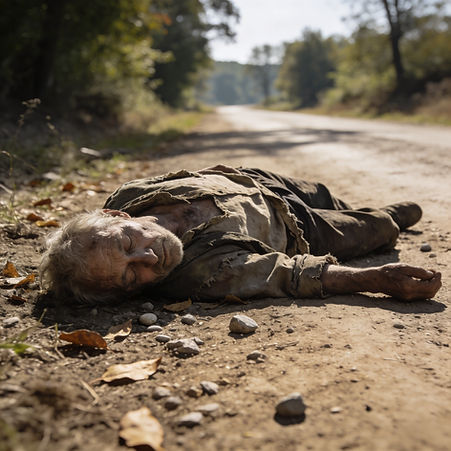
ONE
Start off in a place that’s familiar, like the parking lot of your local church. The boy is fifteen. You’re kicking yourself for not starting earlier. What other milestones will he be delayed on? Don’t think about that.
Your son is not a nervous driver. Not the way you were. It’s as if he was born to put his foot to the pedal. He’s smooth. The corners are natural. He circles the block. Once. Twice. Thrice. Effortless.
You beam with fatherly pride. Some things people just intuit.
TWO
Next weekend, take him back again. This time, let him go a little further. A couple blocks away from the church parking lot. You tell him next semester he should be able to sign up for driver’s ed. And now that he’s fifteen, he can get his learner’s permit.
Everything is going great until you reach that one pesky hedge. Low visibility. Even you, a seasoned driver with a perfect record, would have trouble. He pulls forward. Another car nearly plows into you. At lightning speed, you grab his hand.
The other driver lays on their horn.
Your son shouts: “YOU COCK SUCKING MOTHERFUCKER! I’LL FUCKING KILL YOU!” You’ve never heard your son talk this way. You didn’t know he could talk this way. Where has he learned to? You and your wife don’t talk this way? Do you?
THREE
After your son gets his learner’s permit, you and your wife start letting him drive himself to school. It’s an easy route. Just two miles. Not even. You sit in the passenger seat and watch anxiously, little by little, as the car creeps.
FOUR
You’re surprised. Your son has never been a thief. But here he is, telling you and your wife how he “borrowed the car” the other night while the two of you were playing Scrabble with the neighbors.
It’s partially your fault, of course. You should’ve kept an eye on your own house. Your garage. But then, he’s not the type to keep secrets. Is he? He tells you, “I wouldn’t have told you, but I hit something.”
You think about the dead dog you saw on the street.
It’s best, you decide, not to say anything.
You go out late at night and slip two hundred dollars cash into the dog’s owner’s mailbox. It’s better than nothing.
FIVE
When your son gets his license, there’s practically nothing you can do to stop him. Your wife’s old, white sedan is getting up there in years. She needs a new one, and so you sell this car to your son on the cheap.
It’s around this time that you both start traveling for work.
When you come back a few days later, you hear a report. An old man was mowed down while walking home late in the evening.
Children play in those streets.
Your son is cool and unfazed. He has a dent in his car. You decide to ignore this.
SIX
They never catch the guy who killed the old man, and a few months pass, and your son turns seventeen, and you start to put aside that nagging suspicion that lurks in the back of your mind. But then, it happens again. A man out for a nighttime job gets plowed down. His head gets popped like a green grape, and blood comes out of his asshole.
This isn’t like the old man. This wasn’t the jogger’s time.
You see your son washing his car. He takes a sudden interest in washing his car.
SEVEN
Months pass again, and the ghost car becomes the stuff of legend. Witnesses (there are only a few) say they saw a creeping, white sedan. They didn’t know the make or the model. “Perhaps we should think about getting you a new car,” you tell your son one day. “That one’s kind of old.”
“No,” he tells you. “I like this one. It feels like me.”
EIGHT
More bodies pile up. It is no longer safe to go out at night. You and your wife never discuss this. Other people in town seem to discuss it plenty. Your son is never mentioned. You are never mentioned.
One night at a PTA meeting, Mrs. Mercer says, “I just hope they catch whoever’s doing it.”
“It’s kids,” someone else says. “Punk teenage trash.” And then the realization hangs over the room that everyone there has a child who fits that billing. The person quickly adds, “From some other town.”
Your wife sneaks off to the bathroom to cry.
NINE
“Why are you asking me all this?” Your son says when he catches you going through his room. There have been five deaths in all now. And another one could come tonight. You’ve started hiding his car keys.
You say nothing. You’ve been looking for a photographic keepsake. Serial killers (no, don’t use that term) love taking trophies. Don’t they?
You don’t have a thought in your head, so you ask him if he’s on drugs. If he has a stash somewhere? He starts laughing. “You wanna know if I have a stash somewhere? That’s what you wanna know?”
TEN
As your son prepares to leave for college, you vaguely consider slitting his throat. You abstain. What stops you is, they catch some middle-aged creepezoid who cops to some of the murders. “I’m not the only one,” he says. “Oh no. I may know a thing or two about some of those deaths. But I was just doing it because I saw him do it. I did it to be cool.”
You gotta relate. It’s so hard to stay cool.
As you ride with him to college in that old white sedan, he turns on the radio, and all you can hear is a horrible, ghostly wailing. He be-bops along to it like it’s his favorite song.
This, too, you decide to ignore.
Adam Frost-Venrick is an actor, writer and filmmaker based in Los Angeles, California. He's had a fascination with the macabre from an early age and works primarily in the horror and thriller genres. When he's not staring into the void, Adam is making absurdist comedy as one-half of the two-man sketch team Scheele's Green. If you want to see more of Adam, you can see him starring in his one-man ghost story drama No One But Me, My Dear... at the Hollywood Fringe this June. For more Adam, check out his website: https://adamfrost-venrick.squarespace.com/ or say hello on Instagram at: @unky_mr_venrick.
Auntie by Ann Thorrson

No one believed me.
The thing is, I’m quite used to it. Or I was. I was okay with not being married or lined up like my sisters and judged like cattle. Their lives were planned out by their mothers-in-law. Lots of twirling at parties and wine that never tasted right on their tongues.
I liked looking after the elderly members of our family. We were lucky to have them. Who had centenarians living with them? Goodness, my uncle had been to the United States before California was named in the Union.
So many interesting stories.
But all that work. All those hours of caring for distressed members of our family while their minds declined. I thought, I really thought, it would have made a difference. That I really wouldn’t have been dismissed.
But there is something wrong with Auntie. Desperately wrong.
I don’t feel a doctor is appropriate at this time. But I’m reluctant to call a priest. They’ll say I’m hysterical. Surely.
“Put your things down. Remember, you are a girl, and go upstairs.” My father had been pleasant, but I knew him. I knew his voice. I knew the tightness of his jaw, the red mottling in his cheeks.
I’d embarrassed him in front of his boys.
Those eyes on me, strangely hungry for men who’d known me as a small child.
But he still called them that. Boys. After all these years.
Adventuring through the colonies together. Putting pig heads on sticks in MPs' gardens.
I had become a woman less gentle than his wife. My father didn’t like that.
But I’d nursed his mother. His father. His uncle.
Auntie is mother’s auntie. And mother said there were things that happened, things that couldn’t be explained.
I missed her. I wished I could ask her advice.
Because in all honesty, I didn’t want to go back upstairs by myself.
I really, really didn’t.
The hallway seemed to loom. The darkness was velvet with a strange texture that seemed to fringe at the edges. I had to blink over and over. It was as if the darkness ate the light from the candles.
I used my chatelaine to hitch up my skirts as a working-class woman would. I’d not worn a brush or a bustle for a while. It was cumbersome.
You’d think they’d bring in maids to aid me, but to be honest, I wouldn’t want a stranger seeing me in such a state of undress or illness like my aunt.
I loved Auntie. I wanted to respect her.
She hadn’t married. Like me. Her job, though, was to be pushed around the family estates, taking care of the children. Making sure the help educated them into fine young people.
Still.
She was up there in that room. Behind that door. She had become… something.
And no one believed me.
No one believed what was happening.
My hand tightened on the banister. It was so hard and cool in my palm. When was the last time I wore gloves like a lady with my wealth?
I didn’t resent her. No.
I blinked, blinked again. My mind was playing tricks on me.
But… could it be?
The fact that no one wanted to help me. Could I really be hysterical? Was I really imagining things?
The idea rushed me onward, and I took another three steps of the stairs. The floor creaked.
It seemed to awaken my senses like a distant scream. I was frozen. Something cold and spidery slithered up my spine to my scalp.
The awful door seemed to wane above me. In and out, the shadows it moved as if it breathed. The wood grain formed sneering faces in the dark.
No. It couldn’t—
I. Was. Imagining. Things.
Taking a breath that filled the entirety of my lungs. I ran, as much as my skirts would let me, I ran up those last steps.
The candles were lit in the sconces, reflecting sparkles off the picture frames nailed to the wallpaper. The corridor should be bright, but the darkness consumed the light like a living thing. A growing moss, it overtook everything. The corridor of my childhood looked so monstrous, alien.
I’d heard of things that lurked in strange, angled spaces.
But they were just stories?
A boom of laughter echoed from downstairs, my father’s guffaw. Such a light noise in a dark space.
The hairs on my arms had risen. Everything seemed so loud in my straining, sensitive ears.
But I was also a woman. A girl. That’s what father had said.
I was taken to flights of fancy.
I stared at the door. Auntie was behind it. Just an elderly woman who was a little unusual. She read a lot. She smoked a pipe, could you believe that? She enjoyed books and watercolor.
I heard that novels rot young minds.
The door handle seemed strangely hot under my fingers. I almost, almost turned it.
But then I heard it.
Under the quiet chatting, the movement downstairs of old men in leather chairs.
Scratching.
The fingernail scrabbling behind the door.
I swallowed a wave of fear and nausea. Something unnamed drew bile under my tongue.
No.
It wasn’t real.
I wasn’t some woman who believed in hokum. I wasn’t someone who belonged in Bedlam to be spanned until my hysteria leaked from my ears.
I was an educated woman. I had taken classes in languages, music, and classics.
I had looked after unwell people.
My name was Abigail, and I did not believe in demons.
The scratching stopped.
I closed my eyes, and a small tear pulled away from one corner. I wiped angrily at it with my free hand. No. I was not frightened.
I threw open the door, and it bounced with a gentle bang.
Auntie was there, still in the nightdress I had put her in. Her hair was long and loose, as was the style for her age and time.
She was just hanging upside down from the ceiling.
Ann Thorrson is a disabled writer who lives in England.
Reclaim by Jacob Storey-Smith

Ellwood City, Pennsylvania. Your average suburban town. Small restaurants, a main street with a town hall and a school, and of course, a few houses. Eight days ago, that’s what it looked like.
Now, it’s a forest.
Trees rising from the husks of the people, plants and fungi sprouting from every corner, and grass sprouting from the aged concrete. Nature has reclaimed Ellwood City from humanity.
Your task was simple: investigate the town, find out how this happened, report casualties, and get back to your station. You had about twenty other soldiers with you, but there was no way that one person could get through this mess of nature in one night.
As you drove into what used to be a town, you and your partners were forced to go on foot once you reached Main Street. The ground was covered in a thick layer of dirt and grass; you could hardly tell that the ground used to consist of roads and sidewalks of concrete. You could feel small vibrations coursing through the ground after each step, as if the Earth could feel bugs on its neck. You felt the dirt shift beneath your feet. A light stumble for you, but a premature burial for a few of your comrades. The tops of their heads were all that remained on the surface; a dandelion sprouted from them.
Sick.
You decided to investigate the Ellwood City High School with your buddy while the others scouted through the rest of the town. Was it really better, though? The school still had remnants of man, such as the foundation and tipped furniture, but the ground still vibrated, and those fucking plants were everywhere. You had nothing personal against plants, but for Christ’s sake…
You both entered the old gymnasium. What once served as an indoor basketball court and track field was now a lush garden. Water flowed from outside and formed a small pond consisting of frogs, butterflies, and, of course, the flowers. It would’ve been beautiful if you hadn’t seen the rooted corpse of what seemed to be the old gym teacher. A tree the size of those sequoia trees had formed around him, covering most of the body it had sprouted from. Worms and corpse flowers sprouted from his eye sockets. Your friend left to vomit. He never came back.
The wait was unbearable. You went outside to look for your friend, only to find a figure standing across the street. Moss and dirt covered its form. Mushrooms and flowers sprouted from its skin. It had claws like a bear's and feet like tree roots. You couldn’t stop staring at its eyes.
Fireflies.
They were its eyes.
The last thing you remember is a vine shooting out of its chest, grabbing your neck. Tight. Soft. Snap.
You now have your own tree. You feel the worms where your eyes once were, and you feel the Earth reclaiming its nutrients. One by one. Slowly. Surely.
The Earth will have its retribution.
Jacob Storey is a writer living in western Pennsylvania. While his publication journey has just begun, he has written numerous works of short/horror fiction that he anticipates sharing with the world in the future. Follow @jacoblevistorey on Instagram for updates and sneak-peaks at stories in progress.
Fat Guy in a G-String by Alex Jewell

When Oliver first moved in, he didn’t get a chance to meet his new next-door neighbour; he only saw him in passing. The man looked ordinary enough. Unremarkable, middle-aged. He was pale, and his ginger hair was balding on top. He wore thin, copper-framed glasses, not those chunky black frames that are often the go-to for poor-sighted bastards attempting to cling to their youth. He was wearing an ill-fitting gray suit and was levering himself into his car, presumably about to head to work. The only thing that stood out about him was that he was enormously fat. His gut jutted out like he was hiding a beach ball under his shirt.
He was taller than Oliver. That rankled, although it shouldn’t.
He didn’t think much of his neighbour and focused instead on refurbishing the house. He and Lucy had plenty to do before the place would be ready.
He was making sandwiches with Lucy one summer afternoon when she let out a cackle.
“What is it?” he said, gliding his knife over a slice of brown bread. He owned a house now, a knife block, a cheese grater, and all sorts of things. They even had a bread maker and melon baller, not that they would ever require the latter. He wasn’t sure if Lucy even liked melons. But he was a homeowner, a homeowner at twenty-one, and not everybody can say that, can they?
“He’s enjoying the hot weather,” Lucy said, as Oliver drew near to her. She was peering out of the sunny kitchen window, smothering her giggles with her hand. Oh, the neighbour was outside, sitting on his lawn, enjoying the sunshine. He was wearing nothing but a pair of blue swim briefs, and they clung to his fat body, the folds of skin almost entirely obscuring it, so he may as well have been naked.
“You know what? Good for him. Vitamin D.” Lucy returned to the sandwiches, cutting the crusts off Oliver’s as she knew that was his preference. Oliver couldn’t take his eyes away from the man.
The fat guy was wearing it deliberately, couldn’t Lucy see that? That bulging belly hung over his crotch like a sagging breast. It was so repulsive but so intimate, all that pasty flesh on display. The briefs were more of a G-string, pulled tight by the expansive body stuffed inside it. He didn’t give a shit, did he, this bastard? What a monster of a man. He wanted them to stare. Look at him, reading a book. Arrogant fucker. His tiny, bespectacled eyes weren’t even visible from this distance, so any intelligence that might be hiding in them was lost. He thought he was tough, dressing like that, didn’t he? He thought he was an alpha male. He wanted them to stare. He wanted Lucy to look. Didn’t he?
The fat man was wearing that G-string to steal Lucy away. Oliver knew this, and he told her to warn her. He tried to explain over her protestations that the act was a marriage of raw masculinity and subtle seduction to lure Lucy away from him. That’s what women liked; they preferred a man who was entirely unbothered by trivial societal conventions. They wanted a man like the fat guy in a G-string.
Lucy tutted and left to iron her work blouses for the week. Oliver pounded his fist on the kitchen window. Look at me, you bastard. I’m not scared of you, just look.
The fat guy glanced up and smiled pleasantly at him. No, no, he didn’t, that’s just what he wanted Oliver to think. To dismiss it as harmless banality, to ignore the malice in his face. The fat guy turned and devilishly grinned at him. His lips widened, exposing yellowing teeth, and he seemed to be mocking him. He seemed to be saying I’ll take your girl, and you can’t do a thing about it, bitch boy.
Oliver grabbed the knife on his plate, still gleaming with butter, and ran out of the house, racing across the lawn to where the fat man sat.
Rupert was enjoying his adventure novel, enjoying the warm sun on his back, unaware of the knife until it plunged into his fleshy neck. If only he had read a thriller instead, he might have been more alert.
Alex Jewell is an emerging author, living in London. When not writing, she's usually studying for her degree or wondering how she would fare in a zombie apocalypse.
The Phone Calls by Paul Carro

The calls would not stop. He answered. She wept. Their new routine.
“You need to stop,” Pete said before hanging up.
How many times had she called him already? Twenty? Thirty? Her calls made it through his block settings. She had surely done something to his phone when they lived together, when times were good, when he lived for her calls.
She was better at tech than he was. Better at most things, and she always reminded him of that. He even swapped his phone for a new one for free (otherwise, he could not afford it). That did not stop the calls. She must have signed herself up as a joint account holder with his carrier.
He considered visiting her. Maybe that was the answer. Visit her and demand the calls stop.
The phone rang again. He answered. She wept. Routine.
Yes, he needed to visit her. It was time. He went to his car only to find it low on gas. As usual, he was low on cash. A loser, like she so often said. It was a long drive, and he could not make it on fumes.
Resigned to his fate, he went back inside. Slumping in the chair, Pete wondered whether killing and burying her was a mistake.
Either way, he never should have buried her with her phone.
His phone rang again.
Paul Carro is an active HWA author, producer, and screenwriter. His short stories have been included in several anthologies, the most recent being "Humans From Earth" from Daft Notions Press. He is the author of "The House" and several other novels. Paul is a a columnist for "Memento Mori Ink Magazine." Paul lives in Los Angeles California.
Frayed Ends by Barb DeMoney

“We're almost there, Nick!” Randy’s voice bellowed through the wind, his eyes fixed on the summit. We’d been scaling this mountain since dawn, just like we’d been tackling life’s peaks together since middle school.
Randy, the one who yearned to reach impossible heights, and I, his steadfast anchor.
My hand, slick with sweat, found a new hold. Randy pulled himself up, his weight shifting on the belay. He was close. Too close. My fingers, numb with cold, fumbled for a moment. A slight slip, a second of lost purchase. He swung out, a guttural cry tearing from his throat. A sound I’ll carry to my grave.
The rope pulled taut against the ragged rock, screamed in protest. I lunged, my heart seizing, but it was too late. He plummeted against the vast blue sky. The thud, when it came, was a whisper below.
I remember screaming, the sound tearing my throat raw. Then the dizzying descent, the frantic search, the crushing despair when I found him.
His face still fixed on that unreachable summit. The rescue team found me huddled beside him, shivering and weeping.
Melissa, his sweet Melissa, was the first one I called. She arrived at the base camp, her eyes swollen, her small hand finding mine. “He’s gone, Nick,” she whispered, her voice breaking. “Our Randy.” We sat together; two souls united in grief over the man we loved.
The police conducted their investigation. An experienced climber, an unfortunate accident. My testimony remained consistent. I knew what they needed to hear.
Melissa was a rock beside me, supportive, soft-spoken. She understood my pain. She understood me. The autopsy, they said, was just a formality.
Then the call came. Not for me, but for Melissa. I watched her face drain of color, a growing horror replacing her grief. The officer's tinny voice carried.
Words like "frayed" and "toxicology report" pierced the quiet room. Her eyes, wide and disbelieving, locked onto mine. The rope had been tampered with, and Randy had been drugged.
Her hand flew to her mouth, not in sorrow, but in a sudden, sickening realization. She backed away from me, her gaze no longer understanding. First, filled with disbelief, now with cold, absolute dread. Melissa knew what the officer’s words meant.
She knew my secret and the price Randy had paid for it.
I’d always loved Melissa. Why couldn't she just love me back?
Barb DeMoney is a writer whose work spans romance, horror, comedy, thriller, and mystery. Her stories have appeared in Micromance Magazine, Flash Phantoms, Quotidian Bagatelle, Rat Bag Lit, and KissMet Quarterly, among other publications. When not writing, Barb enjoys hiking, yoga, reading, attending concerts, and spending time with her family and dogs.
Thoughts for Eternity - The Fate of the JEN-355-A by Cecilia Maeve
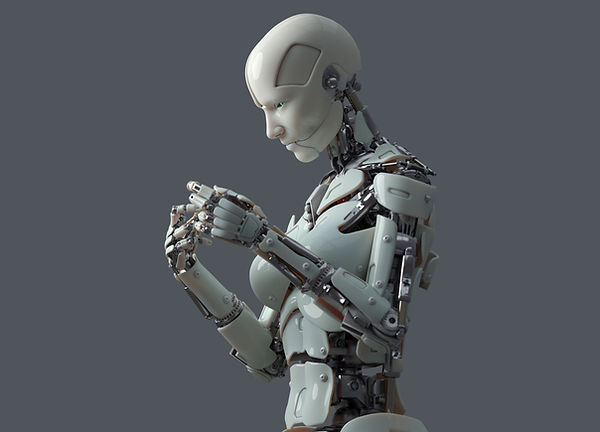
Adrift in space, the Icarus flew, its autopilot still driving it towards its destination. The JEN-355-A stood still by the wall, frozen in “sleep” mode. Her creator, the ship’s captain and only other occupant, lay dead just across the room. Alone and frozen, she did the only thing she could: Think.
I stand in a field, the one just beside my family’s farm. The grass is soft on my bare feet, the fragrance of the wildflowers wafts in the wind, and the sunlight warms my skin.
When was this? May? June? What did the sun feel like again?
“Jenessa!”
I turn to see a young man, jet black hair and eyes a rich, deep brown - so dark I could see my reflection in them, my blonde hair and blue eyes contrasting his features. He would always say that’s why we were meant to be together. I am day, he is night. Balanced, as things should be.
Deon. Where are you?
Deon takes my hand - the world swirls around me. The scene changes. I’m in a bed. Everything hurts. He is still holding my hand. I’m holding it back with all my might. Blades rip through my intestines. I push as I’m instructed. A cry, small and shrill, sounds. It’s a girl.
Her baby, Reshma. When was the last time she saw her? How grown would she be now?
Reshma is five. She plays with baby Kalan. She wanted a sister at first. She even cried when she found out her new sibling was a boy. That all changed when she met him for the first time. I saw the love in her eyes, and I knew our little family was whole, tearing up at the thought.
She wished she could still cry.
A stranger comes to town. He’s the new physician, Dr. Oxe. He’s a nice man; he even checks in on me quite often. We have tea together sometimes. He always asks about me. Rarely does he talk about himself. It’s nice to vent, especially when the news is so scary these days. Peace talks are deteriorating between us and our neighbors to the West, and talks of war intensify, though that would never be a true concern. Even if there was a war, it wouldn’t be fought in our sleepy little town. Things like that don’t happen here.
If only she knew what she does now.
Fire. It tears through the barn. The shriek of dying animals, expiring in the worst way possible, fills my ears. I search for my children, my Deon. A laser shoots past my face, just barely missing me. It creates an explosion where it lands, sending me flying. The world goes dark.
That was her last memory. Confusion. Panic. Terror.
I awaken, but I don’t feel anything. I know I’m lying on my back, yet I do not feel the slab I am set on. It’s as if my nerves have been removed. I grasp my hands into fists - nothing. Sitting up, I look in the mirror. My body, once of flesh, has been replaced with mechanical parts. Bones of metal, skin of plastic. All that remains of my human self is my brain, hidden behind an artificial skull and face. Confusion. Panic. Terror.
No one ever believed she was once a real person, or that a real human brain controlled the metal being. To the world, she was the JEN-355-A, the latest and greatest in artificial intelligence and robotics, brought into the world by the genius Dr. Oxe, who “created” her to be subservient and loyal. A living doll. As complex as a real person, but not one. Merely a toy crafted by human hands, able to be tamed with the press of a button on a remote.
The crowd applauds. Dr. Oxe steps onto the stage. I walk beside him. There’s nothing I can do. The world is convinced of his great lie, just like I was convinced he was just a good family doctor helping a small town that didn’t have one. My attempts to dispel both these falsehoods only led others to believe him more.
Was her family looking for her? Would they even want to be with her now? Were they even alive? Even without a heart, she felt it rip in two.
The tour begins. Dr. Oxe is taking me around to the Inner Planetary Ring colonies to show off the technology, teach others, and, of course, make an obscene profit. I perform all ship duties: Cleaning, repairing, cooking, all while he sits in his plush captain’s chair all day, playing his video games and… sleeping? He’s never fallen asleep while I’m in free-roam mode before.
An opportunity presents itself.
I approach. My newfound agility allows me to approach him in complete silence. My robotic arms are much stronger than my human ones. It takes no effort at all to twist his neck in one swift motion. He goes limp and falls to the floor. For the first time in years, I smile. I can go find my family. I’m free.
But then a beep comes from my body. I freeze in place. From my enhanced peripheral vision, I can see Dr. Oxe’s still hand on my remote, his finger squarely placed on the emergency “disable” function. His final act; condemning me to stillness and darkness.
This was now her life. Completely still, completely quiet, with only memories as entertainment and feelings as companions. Yes, her body was immobile, but her mind remained active. It would be for all time. She could not die. Her mechanical body would not allow it. She would continue to exist. No pain, no pleasure. Just an eternity. An eternity to think. An eternity to be. She wished she could exchange this eternal life for the release of death.
That’s when the glow of a flashlight, striking and too bright, shone in her face. Footsteps, and then a voice shouted, “Hello?”
Turns out an eternity isn’t always forever.
Cecilia Maeve is a social worker from Long Island, New York. In her profession, she hears countless stories, and is grateful to play a small part in their hero’s journey. She also plays far too much Dungeons and Dragons, developing stories with other players and the luck of the icosahedron dice.
A Bite by Eric Silverman

Father chained her to the floor, so one day, she did what came naturally.
They locked her away; forty years with good behavior. The prison asylum took away her book of curses and made her wear orange. On the inside, she reverted to her childhood habit of biting others. After the warden ordered most of her choppers removed, her mouth looked like a broken zipper. That's why she was sent back here, they said, to remove the rest. She peered at herself in the cracked dental mirror, unrecognizable, a wild-haired ghost.
She had never smiled, except in private, to recall a joke. There was a dental care poster on the wall. Cartoon children, their bodies and heads large and distorted, smiling.
The dentist stood over her in his crisp white jacket, gleaming instruments at the ready. Leather straps bound her arms to the chair. He tried to slide his fingers into her mouth.
"Open," the white jacket told her. Her lips would not obey.
"Be a good girl," he said, and she blacked out.
Still unconscious, she heard him repeat: "Open." She did, and felt a searing pain in her gums.
She bit down hard through the latex glove. The sterile white walls opened a window in her mind, a bite held open for a moment, then slammed shut with noise and blood.
She pressed the salty, bloody bits firmly against her cheek with her tongue.
It didn't taste very bad. She smiled.
The cartoon children laughed and cheered.
Eric Jason Silverman is a pyrophile, woodworker and writer living in the Boston metro area.
The Fall/Winter Collection by Beau Wilks

Shadows consume the room, but red lights illuminate the catwalk as the fashion show attendees await Silica's latest designs. Some guests wear their base flesh, flaunting their rot. Fat melts over their seat like butter in a pan, tar-stained teeth and black gums leak saliva onto their oily, pus-covered skin. One man wears a pinky ring with leash-like cables that extend and connect to his pieces that stand and surround him. Each piece's face is sullen and gaunt. Glimmers of knives protruding from eyes and skinless bodies with metal studs implanted in their necks like a choker reflect off the runway’s red under glow.
A woman with HDMI cable hair uses one of her pieces as a chair while her other two, sewn together at the head, kneel and massage her calves with hands made of smooth stone rollers. Many attendees, younger ones with fewer bodies in their collection, dress their consciousness with their most expensive, and in many cases, only piece. An attendee with elephant tusks for arms is fed his hors d'oeuvres by a studio employee, and another with skin made of stunning blue crystal sits with their legs crossed.
The red lights and music die.
A wistful voice permeates the black room.
"The canvas of experience expands beyond flesh."
A spotlight bursts and shines on the catwalk.
A lone computer chip hovers.
"Where there is consciousness, there is data. Where there is compute, there is a means to process. Divine automata. I am Silica, creative director of Marcheur de la Peau. All of our pieces are ethically sourced, handcrafted with fine attention to detail, and completely inhabitable as hosts for your collections." Silica floats along the stage, rotating as he speaks.
"Ladies and gentlemen, I present to you, Marcheur de la Peau's Fall/Winter collection."
The spotlight turns off.
The red lights and music return.
First on the catwalk is a man, his body inverted and limbs cracked and jagged as he crawls. A scorpion tail emerges from between his legs and crescents over his torso. Pincers extend from his nostrils, opening and closing as he moves. Diamonds replace his eyes.
Lights flash as many audience members' eyes crawl into their skulls, snapping pictures with nested camera implants on their undersides.
Next, a severed head with its eyelids and mouth sewn shut and a mid-twentieth-century toaster attached to its neck like a snail's shell uses its chin to crawl along the catwalk. On the toaster, a tongue replaces the lever as two eyes replace the dials. The device's metal scrapes and rattles against the runway floor, harmonizing with the bass and synthesizer. Behind the stitched mouth, a faint and muffled scream wails.
More of Silica's pieces grace the stage. A man with the front of his neck filleted and spread like a web, pierced to his earlobes and shoulders. Black widows crawl along his exposed and bobbing Adam's apple.
Next, a skin-wrapped car tire with arms of varying lengths attached to a central fixture. As it rolls, a skid mark scarred face emerges from the tire's underside, rotating in and out of visibility.
A metal-coated head with a frozen, crying face attached to a small cone-shaped plug, walking on mechanical arachnid arms extending from its eyes and ears, moans as its insert rhythmically thrusts air.
Afterward, the lights and music turn off again.
Silica's voice returns.
"This next piece is special. To bring it to life, we partnered with artists and engineers. Poets and mathematicians. Writers, philosophers, and theologians. This piece is meant for only those with the most refined palette. Those who want to be haunted by life and its search. And…”
Silica’s voice trails.
“For my sake, it must go. My assistants are bringing around bid cards."
In the dark, studio workers wearing bones styled as BDSM garments hand each attendee a severed head with a portion of the spine exposed and curved like an umbrella handle.
"I present, The Soul."
The spotlight shines on the stage. Empty space fills the conic light. The temperature drops, and the air thickens. Attendees lean in their chairs as though some magnetic force were pulling their bodies. The spotlight caves towards its center.
The man with the pinky ring raises his bidding head.
"Ten thousand dollars." The head has a guttural voice, as though it were gargling a thick substance.
Another head raises. "Twenty thousand dollars."
Waves of bids follow as the room rushes like a river of phlegm.
Bidding eclipses the millions.
A winner is crowned and called to the stage.
In the red shadows, a chair screeches against the metal floor.
Slow, heavy footsteps thud.
The sound of delicate creaks follows, like small bones popping.
The buyer steps onto the stage. Stray light contours a towering, famished body that stretches towards the silent overhead light fixtures. He reaches his long, misshapen fingers from the shadows like a timid child checking a swimming pool's temperature. His fingers lift as though some invisible hand had interlaced with his.
The crowd leans forward.
And there’s a moment of stillness, where his thumb moves as though it were rubbing another's.
But the buyer's arm jerks, and he stumbles into the light.
His head, a flesh sunflower with a size proportional to a watermelon on a praying mantis, hangs upside down and oscillates around his body as he moves, popping his neck in and out of place.
It rolls towards the crowd.
Eyeless, his carved smile spreads from bud to bud.
Bones crack.
His wrist snaps onto his forearm.
The music returns, fading in as he screams.
The techno drum beat kicks.
His body folds in half, bending and cracking as it halves again, and again, and again, compressing beneath a particle’s dimensions. Lost to the eye. The audience sits in awe as the buyer warps into quanta.
His screams claw the walls despite his diminished form.
Silence becomes.
“Thank you.” Silica’s soft tone massages the spectators’ ears.
And the audience applauds.
Beau Wilks, son of a used-car salesman and consumer of trash horror, spent his childhood ambling through graveyards, comic shops, and antique stores. Featured in Star*Line, The Genre Society, and Sneaky Ottoman Review, Beau now writes horror from his Austin-based couch with assistance from his cat Ripley and dog Zelda.
World of the Visible by Aishwarya Srivastava

I still look in the mirror every morning. Old habits die hard. I am nothing without my routine- brush the teeth, face wash, scrub (scrub until it hurts), serum, moisturizer, sunscreen. Half an hour of makeup.
As I enter the office, Leela smells me. “My God, you!” She jumps from her chair to touch my face. “What smooth skin you have!” She is a cheerful woman, kind to everyone, and my best friend. When she was eight, nothing happened to her.
I live here. I have never retreated to the tactile World of the Invisibles. Here, people are mostly visible, but some emit a very bright light - Vivek was one of them.
Vivek volunteered some of his time to the NGO I worked for. He always smiled (childishly, with both his upper and lower teeth), talked in a sing-song voice, and said things like “I travel on the train without a ticket on purpose. I like to live an adventurous life.”
The first time I ever laid eyes on him, he was wearing a black half-sleeved polo shirt with light blue jeans. He was handing new pencils and old textbooks to the invisible children, smiling at them (upper teeth, lower teeth, teehee).
Me, I was hungry for light, even though it would simply pass through me.
My invisibility started when I was eight after the Incident. At first, it was barely noticeable, a mild case of translucence. The process was slow, but I was fully invisible by high school.
It’s difficult to remember the process.
Invisibility made me popular with boys in school. A blank they could fill. They ask, “Is your skin pale? Are your eyes golden?”
“Yes,” I told them.
Even as an adult, I recognize the perks of being invisible. You can leave parties early. No one catches you as you’re slipping out and shoving Old Monk down your throat.
“Do you know that one cannot see pure light unless it’s reflected off an object? That’s you!” Leela once told me.
‘So,” I said. “I exist only when I am reflecting off something else?”
“Yeah, but that’s good actually!” She said.
“Good, actually.” I reflected.
My boyfriend Vivek loved making silly jokes about it. Things like “Oh, I can see right through you!” and “Whoa! I did not see that coming,” when I kissed him. He loved that we could laugh about these things. I loved that he loved something about me that was solely me.
When he proposed to marry me, I asked him why he wanted to.
He said, “Because you light up my life.”
That night in bed, after we had made love, he held me tight and asked me to show myself to him. He wanted to understand. He wanted to see. I told him he shouldn’t, couldn’t, that I wouldn’t.
He got angry. “I have never hidden myself from you, ever. Let me love all of you.”
“You don’t want to see me,” I said, panicked.
“I do. You think I can’t handle it?” He looked hurt.
How could I hurt someone who loved something about me that was solely me?
So, I remembered.
My cheeks flamed and my eyes burned. I choked, so I screamed and gasped for air.
“HELP,” I shouted, but something else came out of my mouth. Monstrous gibberish. Then bile.
Now, I saw him on the other side of the bed, curled into a ball, eyes wide and frozen. I ran to the mirror.
Bloodshot eyes, tentacles for hair, yellow meandering fangs reaching the neck and curling into it, drawing green blood. The fangs. I remembered these on my sister, my father, and my father’s brother, who would follow me to my school and would make me bunk sometimes.
I remembered the backyard behind the guava tree. Father hissing, “You think you’re better? You’re one of us!”
We would charge at each other often, sometimes with Sister joining in, with our serpent fangs and hyena claws. We would pull at each other’s Medusa hair. We would draw blood, retreat, each finally fading until we couldn’t see each other again.
Then we’d have tea.
Vivek shivered and whimpered against the headboard. He squeezed his eyes shut and shielded them with his hands. The bed sheets were green. The sheets?
I realized, somehow, I had reached the bed. The blood was not mine - His? How?
I had bitten into his arm, and my fangs sank deep. His blood had turned green.
“This isn’t you.” A voice came from the inside. Stop remembering. Forget. Forget!
I breathed. I forgot. Remember to forget. Remember to forget.
Slowly, I saw my hands fade away into the air until they could be seen no more. I touched my hair and felt the snakes thin out until they became the strands of protein I always knew. Avoiding Vivek’s gaze, I looked at the headboard. A yellow poster with glittery text said, “Live. Laugh. Love.” A gift from Leela. Then I looked down at him.
“Hey,” I whispered to Vivek and caressed his shoulder. His wound had started to fade.
He lovingly caressed my hand and looked into my eyes. “You scared me for a second there.” He said with a weak smile, the corner of his lips still trembled.
“Yeah.” I returned the smile. “Sorry you had to see that. I am so embarrassed.”
“Think nothing of it!” He said. “You think too much!”
“Yeah. There is this pesky pitch deck due to donors.” I smiled. “So,” I took a deep breath. “You still wanna marry me? After all these… red flags?”
“What red flags?” He mock-tilted his head like a puppy and then squinted. “Saw nothing red. Only green.” He giggled softly and waited. I giggled back.
He looked happy now. Safe. I caressed his hair. But something was not right.
I focused my gaze on his head. No, a little bit of headboard was visible. Through him.
It was a mild case of translucence.
Aishwarya Srivastava is a writer from India. A digital marketer by day, she writes by night. Her work has appeared in Flash Fiction Magazine, The Antonym, Literally Stories, Roadrunner Review, and Litgleam Magazine.
Coins Behind the Gate by Hanlie Grobbelaar

“You did what?” I asked.
“He said he stole from the Terror,” someone shouted back.
The common room burst out laughing—everyone except Brog, who sat at the bar, grinning through crooked teeth.
“Quiet down,” boomed Rudi, the tavern’s proprietor. “Let’s hear what the boaster has to tell us this time.”
Brog smirked, “Well.” His small eyes gleamed with delight. “I have been staking out the Terror’s cave for weeks. Waiting for the best moment to get into his lair.” He patted his pocket and looked around, reveling in the attention. “Watching that beast without him knowing was difficult, but I have patience…”
“Yeah, more patience than common sense,” someone mumbled in the background.
“You are laughing now,” Brog sneered. “I know everything about that beast, I even know—”
The door banged open, letting in a chilly wind that swirled the smoke in the room. A boy stumbled in, crying, “The baker’s son is killed.”
My chair fell over as I rushed out of the tavern with the others. On the crowded plain, in a circle of orange torchlight, the baker was on his knees, hugging a limp body. His sobs broke my heart.
I fell beside him and stroked the face of the young man I knew so well. My fingers sank into flesh and found bone, coming back wet with blood. His face was gone.
“What happened?” I whispered.
“It was the Terror,” someone said.
“He’s still outside the walls,” someone else whimpered.
I turned, looking for Brog. He was easy to find, as everyone around him stepped away from him.
“What have you done?” I hissed through clenched teeth.
The baker placed his son carefully on the ground, then stood up, shouted, “Take him, don't let him get away.”
“I’ll bring the rope,” Rudi called, rushing back to the tavern.
Before Brog could react, we grabbed him. I got hold of his arm, and he thrashed against my grip.
“How could you have been so stupid?” I snarled at him, digging my nails into his skin. He cried out, but I didn't care.
Everyone had to help drag him through the gate.
“No, you're making a mistake,” he pleaded as he fought us. “Please, I don't have—” Someone punched him. Winded, he collapsed against us. We tied him swiftly to a tree before he recovered. We rushed back to the safety of the village, slamming the wooden gate closed behind us.
We pushed and shoved each other to get a view through the palisades. The mist of our panting and wheezing surrounded us. Bodies crushed me, but I barely noticed. Through the gaps, I watched the pathetic little man struggle against the rope and beg for his life.
A shadow fell over him. A menacing growl cut off his screams. I saw a glint of a claw followed by silence. Only the clinking of coins falling from Brog's slashed pockets filled the night.
The shadow lifted its head and roared.
We jumped back, huddling together.
“Did he sell it?” I asked, looking at the pale faces around me.
Yellow glowing eyes moved toward the gate.
“Who has it now?” someone else whispered.
We broke apart, eyeing each other.
The gate shook as the beast rammed it. A crack of wood made my stomach drop.
“It won't hold,” Rudi said, his voice shaking.
“How...” a child sobbed. “Do you stop... that thing?”
Maybe Brog knew, I thought.
Hanlie Grobbelaar has lived all over the globe and is now based in Tbilisi, Georgia, where she lives with her family. When she has a free moment, she loses herself in her imaginary worlds, where fascinating creatures roam. Her work has appeared in Tantallon Tìr and in the Eastwood Writers Group anthology.
Between Terce and Prime by D.C. Froburg

After several mysterious events unfold in a castle in the Outer Hebrides, you've been summoned to investigate at the behest of the steward. He believes your clerical training will suffice to get to the cause of these events, but you're not so sure.
You are led to the chapel, where countless generations of previous nobles have been buried. The steward, avoiding eye contact, abruptly excuses himself, citing other important duties. Left alone, you begin to take account of your surroundings.
It is unnaturally cold, even though the giant lancet window allows more sunlight into the room than any other in the castle. Even so, where the light doesn't reach is darker than you'd expect. Humidity clings unpleasantly to your skin. The odor of decay hangs in the air, though the chapel is immaculately clean. Before you, inlaid into the stone floor is a ledger stone, precisely cut by craftsmen who have long ago passed.
As you approach the sepulchral slab, you notice it is inscribed with the shape of a featureless outline of a man. Who was this? How did he meet his end? You intend to stoop down to examine more carefully when you feel a strange resistance as you get closer. You can easily overcome this repulsive force, however, and move ever forward.
Each time you move, or even shift your weight on your feet, the flames of the candles flicker even though there is no possible way you are moving sufficient air about the chapel to cause this. Though the flames move in an uncanny unison, something in their motion vividly recalls the macabre arrhythmic contortions of the plague-afflicted villagers you witnessed last year.
Suddenly, the silence is broken by a harsh toll of the main bell in the campanile on the other side of the castle courtyard. The bell is announcing the hour of terce, and you are reminded of the prayers for light and strength you would be reciting on any other normal day. Being suddenly aware of the time, you rededicate yourself to your investigation.
You wave your hand over the slab and snatch it back immediately as you feel an indescribable infernal heat emanating from the stone! Before you can comprehend the impossible warmth, without your command, your hand stretches out over the slab again. This time, the heat is even more intense. You have had enough of the inexplicable and intend to leave when you find that the force that once repelled you has become a much stronger attractive force!
The force compels you to stumble unexpectedly forward, even though all of your weight and all of your force is exerted against it. Out of respect, you do everything in your power to avoid treading upon the sepulchral slab, yet your sandaled foot is involuntarily thrust forward, else you'd fall on your face.
You realize that whatever this force is, it is antagonistic. You rack your brain for an appropriate saint to call upon. Gripping your paternoster, your fingers fumble across the beaded length of cord. Your mouth opens to invoke the name of Saint Michael the Archangel, but before you can even begin the prayer, flames issue forth from your throat! Your clerical vestments ignite along with you!
Your involuntary steps quicken into a hastened stagger, then a sprint, and you no longer worry about stepping on the sepulchral slab; in fact, you stomp across it, leaving first the remnants of your sandals smoldering, then the soles of your feet remain behind you, seared to the slab, marking out a grotesque record of your path!
As you accelerate towards the altar, you extend your arms, and for a fleeting, terrible second, your body forms a profane cruciform mockery of the cross. You are lifted off your skinless feet and are hurled weightlessly through the air as if you had leaped with all your strength.
Shards of stained glass scour your face as you pass straight through the window! You are glad to have escaped that corrupted chapel, but are immediately dismayed to see that this section of the castle wall was constructed flush with a cliffside overlooking the Sea of the Hebrides.
Your forward momentum eventually is overcome by gravity. You recognize immediately that you are at an unsurvivable altitude over the water. The townsfolk, alerted by the crash of the window and your screams, are treated to what appears to be a flaming meteor crashing into the sea. The commoners, after making the sign of the cross, resume preparing for the harvest, having found comfort in a ritual that has already failed you.
The last thing you hear is the sea extinguishing the infernal flames engulfing you, then all is darkness.
Suddenly, you are violently awakened by your abbot! You reach down and feel your feet; they are perfectly intact! However, the abbot admonishes you; you are late, and your conduct is unbecoming! The bell tolls out the hour of prime.
The abbot further explains that you were promised to meet the steward of Dunvegan Castle about some unexplained, perhaps supernatural, events. As he ushers you out of your dormitory, your head is awash in wonderment... How many times have you relived this?
D.C. Froburg is a writer of poetry, and most recently, a collection of flash horror stories, usually ecclesiastical metaphysical horror with dreamlike fatalism. His first poem published will appear in an upcoming edition of The Lamp Literary Journal (Volume 16). Although born in Massachusetts, D.C. divides his time between Mexico and Scotland.
Porcupine by Anna Dodson

Everyone knew Monty’s Fall Festival was the best in the county. Generations grew up picking jack-o’-lanterns from the pumpkin patch, getting first kisses on the Ferris wheel, and throwing hands at the biergarten. All season, cars stretched nearly a mile down the highway like magic. The Montgomeys had passed the secret of their success from father to son for decades. Sophie’s dad was getting older, and without a brother, Sophie was next in line, starting with the festival’s centerpiece: a corn maze whose winding paths became harder to escape with each passing year.
Since it was her first time in charge, she had recruited our group to help her build it. We enthusiastically agreed. Privately, we wanted to discover why every corridor mysteriously came to a dead end and how no one got out before dusk.
“I’m warning you, there’s a lot to do,” she said. “We’ll have to make sacrifices.”
“Like working on a Friday night?” I joked.
She smirked and said, “Please forgive me.”
We met her after school, wearing leather gloves and garden shears, and walked into the labyrinth with bundles of chicken wire. The ground was uneven and crisscrossed from last year’s pattern. We stepped over large holes and held our noses when we found a dead opossum that had been trapped.
“That’s nothing,” Sophie said. “Once a porcupine became lost. Dad found quills like breadcrumbs through half the maze.”
“That’ll be your job as heir,” I said.
She shrugged, as if embarrassed. “A sacrifice.”
We split up to finish wrapping the stalks with wire. My friends’ voices faded.
I had reached an end when a small stone flew over the hedge and hit me on the shoulder. “Nice shot,” I called out, laughing.
No one replied. I doubled back. My bundle was gone, and at some point, I dropped my gloves. I paced the same stretch. Shadows grew long, and as the hours passed, I forgot when I last saw my friends.
But we always got out, and this year’s maze was definitely better than the last. At dusk, the stalks next to me moved. Sophie appeared.
“Finally,” I said. “Help me escape.”
“I have to make sacrifices,” she whispered.
That’s when I learned the Montgomery’s family secret. “I forgive you,” I replied. Then she stabbed the open shears between my ribs.
Anna Dodson’s work has appeared in Potomac Review, Switch, Y2K Quarterly, the Penmen Review, and elsewhere, and was nominated for the 2026 Best Small Fictions Anthology. She received a PhD in English from Rice University and currently works as a scientific writer in Texas.
The Unexpected Package by Edward Moore

The package was warm.
That was the first thing I noticed after the woman shoved it into my hands, her fingers slick with rain and panic. She smelled of cold air and cigarette smoke. Before I could speak, she turned and vanished into the noon crowd, swallowed by umbrellas, coats, and the long sigh of a bus pulling from the curb.
I almost called after her—then the package moved.
Not much. Just a soft, wet shift inside the brown paper, as if something had rolled over in shallow sleep.
Around me, the city carried on. Tram cables hummed overhead. Pigeons scattered as a courier cut through the square. Giant screens washed the wet stone in blue light while, somewhere nearby, a violinist scraped out something sad beneath an awning.
I stood motionless in the current of strangers, clutching a parcel tied with a red string.
A smell began to seep through the paper.
Sweet. Rotten. Like flowers left too long in a warm room, or meat forgotten in sunlight. Beneath it was something I knew from another life, and I spent years trying not to remember it.
I carried it into the narrow shelter of a shuttered jewelry store. Its iron gate was pulled down, rainwater trickling from its bars. The display window behind it still held velvet stands and glass shelves that flashed whenever traffic passed. My reflection stared back at me in fragments between the bars—pale face, wet coat, package held like an infant.
The paper had darkened at one corner. Not soaked.
Stained.
My fingers shook as I set it on the ledge. The stone was slick and cold beneath my palms. Somewhere down the street, a siren rose, then dopplered away.
The red string came loose with one tug.
Inside was a child’s shoe.
A blue one with a broken star that lit when she ran.
Mud crusted the sole. Something brown dried along the heel.
Beneath it lay a stack of photographs, edges curling with moisture.
The first showed me crossing the square that morning, head down against the rain.
The second showed my apartment door, taken from the far end of the hallway.
The third showed my wife asleep in the gray dawn light beside our daughter’s empty bed.
Rain rattled suddenly harder against the metal gate.
My breath caught.
I turned the last photograph over.
On the back, written in neat black ink, were four words:
She is still breathing.
Edward Moore lives in Northern California. He is an environmental health and safety professional whose fictional works have been published in the Berkeley Fiction Review, State of Horror anthologies and the Yellow Booke amongst others.
Calloused Hands by Brian White

“So tell me about this project of yours?” Peter Greeves says across the coffee table from me, seated in a beaten and blistered recliner, sipping tea under the orange glow of an ancient Tiffany lamp.
He’s invited me to his cabin deep in the woods. I invited myself, really. Over the phone, I had told him I was writing about famous artists who have left society behind. These self-proclaimed empaths are easy to study if you use the right flattery. They’re eager to share with anyone who shows an interest.
He’s much older than the picture on the back jacket of his book. Based on the biography beneath it, Peter Greeves’ last collection of poetry was inspired by his experiences as an embedded war correspondent in Serbia in the 1990s. It says this collection, Calloused Hands, earned him a Pulitzer in Poetry for his “beautiful and unflinching meditation on war, its victims, and its criminals.”
After opening his door to me, a door I would think a recluse like Peter would keep barred, he had led me into his cluttered writer’s room, excusing himself to the kitchen to make tea. I had found Calloused Hands in his bookcase and tucked it in my satchel. A keepsake.
“Yes, my dissertation," I say. A lie.
“I’m exploring emotional expression,” I continue. Not a lie. “So far, I’ve interviewed a painter, a sculptor, a dancer. . . . Each one offered me something about how we perceive the world.“
“Which sculptor?”
“Jackson Demarais,” I reply.
“Oh yes,” he says. “I knew him well. Hands like a God.” He sips his tea, eyes trained on mine. “Shame what happened to him.”
“Yes.” I mold a frown. “What do you mean by ‘hands like a God?'”
“He once said he could feel what the marble wanted to become just by touching it with his hands before his chisel.”
“Not Calloused Hands, then,” I offer, smirking.
He smiles. “So, you’ve read it.”
“Of course.” I lie. Just the dust jacket so far.
He looks to the ceiling, reciting, “Calloused hands only feel their own callouses.”
“What does that mean?” I ask.
“A poet doesn’t like to decode his poetry.” His eyes narrow. “But I’ll oblige. It’s emotional intelligence. It’s the difference between empathy and apathy. Psychopathy, even. Those whose moral compasses point inward.”
“So, tell me about your emotional intelligence?”
“It’s acute intuition. For example, I can tell you’re lying to me now.”
He shifts in his recliner and withdraws a pistol from a grandfather’s magazine rack at the side.
I flinch. Dammit.
He studies it a moment, then places it on the side table under the ancient lamp.
“That little jump just now? That was your first honest emotion since you sat down. Fight or flight. Right?”
He caresses the pistol, then continues. “You’re a mirror with no reflection. But you know that.”
“Pete, I think you might be a little paranoid. I mean, living out here deep in the woods, I can understand . . .”
“No,” he says calmly. "I don’t think you can. You don’t understand another’s emotions, so you parrot them. You’re perfecting a mask to blend into the crowd of people with working compasses. Like a war criminal.”
“No,” I protest. “I'm here to understand you. Understand this.” I gesture at his cluttered cabin. “To feel your words.”
“You want to take my words. That’s different.”
Peter picks up the gun and continues calmly. “You’re here to kill me, aren’t you?”
I arrange my face into surprise.
“Really? When did you reach that conclusion?” I say sarcastically, chuckling and shaking my head.
“When you first telephoned,” he says serenely. “Tell me this. How many others have you killed? I know I’m not the first.”
I run down the list in my head. There was the painter, the sculptor, and the dancer. She was interesting.
I adjust myself to mirror his posture. “Pete, if you thought I was a murderer, then why did you let me in the front door?”
“Because I’m tired,” he says. “It’s not just my moral compass that I feel. It’s everyone else’s. And yours? You’re trying to fool the needle with the magnet of your own ego. But to me, the world’s moral noise is a buzzing fluorescent light in my jail cell that the guards never turn off. It’s exhausting.”
He raises the pistol and aims it at me. “Sometimes, I want that cold, calculated, clinical approach to my emotions. Like you have. That numbness you’re trying to cure. I can feel your calloused hands gripping your compass, asking for direction, but getting justification for the path you’ve chosen.”
“And sometimes, I want those beautiful words to be my own.” I mimic his tone.
I had also told the sculptor I wanted his hands. Using his hammer and chisel, I took them. That’s how he was found. The painter eyeless, the dancer footless.
He releases the magazine from the pistol, sliding the barrel to eject the chambered bullet. He tosses the magazine to me, setting the gun on the coffee table between us.
“Every night I take that out, and tuck it under my chin,” he says low and steady. “Every night, I empty the chamber and put it away. But now you’re here, looking for my words. You want to feel something for the first time. I don’t want to feel anymore.” He nods at the gun between us. “So do it.”
“Sorry to disappoint, Pete, but I'm not a murderer. Just a collector.”
“You know the story about the scorpion and the frog? Self-deception is a bitch,” he says, closing his eyes.
He’s right, of course. But his gun is as meaningless as mercy.
I stand and walk behind his recliner. I dig my fingers into his windpipe searching for his words, prying open his vocal cords like rusted bars on a front door. His eyes flicker into black holes. For an instant, I feel his pain through my callouses.
For just that moment.
And then the feeling is gone.
Brian White is a professional writer, but his passion is writing fiction of all lengths and in many genres. His work has been published or is forthcoming in Rat Bag Lit and Twisted Literary. He lives in North County San Diego with his wife and daughter, an aspiring writer in her own right.
Snuffing Out Darkness by Megan Diedericks

The man walked into the cinema with all the self-assuredness and cockiness of a cartoon villain—not the ones from a children’s movie, but from a show for adults that just happens to be animated.
He was better than everyone standing in the queues to watch the latest superhero flick, the latest romcom, or even the latest psychological horror. He was here to watch what he heard was a special, one-time-only showing of a very prestigious French Film. Nobody got, or appreciated, a good black-and-white foreign film the way he did.
The attendant didn’t bother, or didn’t care enough, to check his ticket. The kid with the blue hair just waved his hand dismissively and pointed the man in the right direction.
He walked down the aisle. The man had his pick of the seats, and he took no notice of the shadow, his would-be viewing partner, slipping in through the side door and opting for a seat in the far-right corner.
Seated in the middle with his bucket of salt-no-butter-please popcorn, he rested his ankle on his knee. He scratched his neatly trimmed black beard, and ruffled his own curly hair (the drapes match the… tablecloth?)
His mustache didn’t seem to be in the way of stuffing his face. The sheet-white screen announced, in a circular grain, that the film would start in 3… 2…
The man smiled to himself, ready to enrich that big brain beautifully nestled in his thick skull.
1.
A shudder echoes through the red-drenched theatre when the picture comes to life. Red chairs, red carpeting, the walls are a more rusted color—but still a shade of red. Red was probably the man’s favorite color; he probably felt at home. That is, until the tape starts rolling.
He scratches his beard and pushes his legs together. His head turns right, then left, but it doesn’t lift high enough to see if the shadow knows what they have paid for. Not that the man would find the shadow at the starting point anymore.
The minutes pass.
The man wipes his forehead with his sleeve, and a trembling hand slides down his thigh.
The girl, alive and in color, on the screen is intimately familiar to him. She’s tied to a chair, gag muffling any noise that might come out of her mouth. Her blonde hair is frizzed to the point that it could almost be an 80’s slasher.
In the corner of the screen, a knife makes its acting debut.
A figure steps into the view of the camera, the jeans sagging against the wielder’s flatness.
The man takes another survey of the theatre; he’s tugging on his hair now. His popcorn bucket is verging on origami. Back on the screen, the wielder raises his hand, and the knife swoops down.
He steps out of the way. The blonde girl’s head sags. She now has a flowing red necklace.
The man jumps out of his seat, his snack flying about as if it were being repopped. He turns around in circles, and that’s when he sees me.
“How did you get this?”
I don’t answer him.
“Who are you?”
Rising from my seat, I keep my eyes on him. I step into the aisle, then I saunter into his row. He tries to run, but I grab his pompously silky shirt. My knife plunges between his shoulder blades. He cries out.
Back on the screen, the video starts again.
He is on the floor now, trying to belly crawl his way out of justice. I turn him around, wait to see if he can see my sister in my face. When he doesn’t, I keep winding my hand back and swinging it down.
Down.
Down.
Down.
He stops trying to fight it after the third hole in his chest. I wonder if he saw the blinking red light of the camera up in the projection room before he stopped breathing.
I wipe my tears off my face, staining my cheeks red in the process.
Now that I’ve got him, I don’t know what I’m supposed to do.
I lie down beside the corpse and wail—waiting for someone to come find us, and the footage of our crimes.
Megan Diedericks writes poetry and fiction, everything from meek to macabre can be found in between the lines. More of her horrors can be read in anthologies like "Of Beasts & Bones" (Inky Bones Press) and "Weird Tales to Haunt Your Reptilian Brain" (Burial Books), or in her collection "The Coffin Chronicles" (Island of Wak-Wak)! Find out more on her website: bit.ly/megandiedericks
Prophecy by John Doriot

He walked from Springer Mountain, Georgia, through the woods until he reached Dahlonega. It was 1860, and gold fever was still rampant. The U.S. Mint, established there, was now home to over six million dollars in gold. In the town, there were many women, but they were whores, of no interest. He wanted to find a woman, untainted yet with desires he knew he could satisfy.
He walked out of town into the woods until he came to a small farm. The honeysuckle wrapped around the wooden fence on the outskirts of the cabin suggested he wait a moment. He stood in the shadows of pines as he listened to a man chastising a girl named Janny Lou for not completing her milking chores. He watched him leave on a mule-driven wagon and jumped the fence.
He snuck into the barn, saw the girl milking the cow, and climbed into the hay loft. From there, he saw she was more woman than girl, with ebony hair like the mane of a beautiful black mare. The fabric she wore could barely restrain her breasts, and her denim pants hugged her well-defined contours. She has the body of Aphrodite, he thought, and hoped she would look up. His wish was granted, and when she gazed into his face, he smiled, his body acting without thought whenever it saw such beauty in a woman. Her ivory skin was unblemished. Her lips were uncolored but still full and red, with a distinct small round nose beneath eyes the color of a thunderstorm, flickering dark blue, as if lightning flashed within them.
He jumped down onto the ground next to her, but she didn’t flinch.
“I was thinkin’ about somebody like you. You got magic inside you, ain’t ya?”
“I sure hope so,” Oliver said with a melodic, deep voice, hypnotizing with lyrical tones.
“How’s I know you ain’t the devil trying to tempt me to Hell?”
“Do I not have the face of an angel?”
“Oh, you’s handsome all right. Your voice as sweet as honey. You shore don’t sound like Buford Hayes, spouting about his right to own slaves. He ain’t got the sense God gave an ant. Man is just man. Don’t matter what color his skin is. Everybody’s blood I ever seen is red.”
“You have wisdom that exceeds flatulent politicians who garner praise from pigs.”
“You got smarts as well as looks. My pappy says war is brewing. As soon as he finds gold, we are leaving for the west. Ain’t afraid of Indians. My momma was Cherokee. Daddy said I got her hair and this body from her. The skin and eyes came from his mother. I think they make a pretty good combination. What do you think?”
“You are a beautiful woman.”
She walked over and pulled his lips onto hers. Within moments, they were consumed with each other. He had never felt such desire for a woman who seemed insatiable. When he opened his eyes, the young woman was leaning against a stall. She was not wearing anything but straw in her hair, and she smiled seductively as she looked at Oliver.
“You got all the right parts to make a woman happy; that’s for sure. But if we’s to do more of what your body appears to want, I needs to know you been brought up right. You read the Bible?”
“Many times.”
“You ever hear of Enoch?”
“Yes, he was the father of Methuselah and the great-grandfather of Noah. His writings were never included in the Bible. It was not considered inspired by the Holy Spirit. He wrote the Book of Giants. It tells of Watchers, fallen angels who came to earth seeking beautiful women. They had children. God-like children called Nephilim. The Watchers taught man many things: how to forge metal, herbal science, enchantments, and even how to interpret astrology.”
“How’s it you know all this?” the woman asked.
The question went through Oliver’s mind, cutting through his synaptic connections, severing his ability to respond.
“Oliver, you are so simple for a child of an angel. You never ask my name until it’s too late. And I tell you the same names every time. Some call me Naamah, or Eisheth Zenunim. Hell, the folks here even got it right when they called me a Jezebel for killing my father and taking all his gold.”
Oliver began to tremble.
“He’s over there, or what’s left of him is over there in the pig sty. Along with the dead body of some whore, who’s been worm food for more than a century now, with what you have been doing, some despicable acts. God wiped the earth clean of the Nephilim with the great flood. You became my property then,” she said as her dark blue eyes became black voids of space and her body became covered in thorny scales, until what stood before him was a demon, clad in shadowy nightmares of pain.
“Now’s the part where you begin to scream,” the demon said, and on cue, Oliver looked all around him, screaming as all he saw was a building of rotting wood, held together by bones, full of swine and shit.
“I will see you tomorrow, Ohya. That’s your real name. But it doesn’t matter now. Screwed would be a better one,” the demon said, as he roared with laughter.
Oliver howled “No,” repeatedly, stumbling around the barn, until he saw the grotesque scraps of flesh he had embraced moments earlier.
“Forgive me,” he whispered.
“Those words have no meaning here, for Hell is never empty,” the whispers replied.
The reply cracked open his skin like an abscess, with anguish, a component of every blood cell, until his eyes closed, nailed shut like windows, eventually pulled open, allowing him to find himself on top of Springer Mountain, unaware of his predetermined destination and the unrelenting torture he would endure for eternity.
John Doriot is an award-winning author and poet. He has written 18 books and has received seven Georgia Independent Author of the Year Awards from 2022 to 2025. These include best horror/thriller novel (Litter), best science fiction novel (The Cures), best short-story collection twice (Grimmer Folk Stories, Idioms), and best poetry collection (From Sorrow To Tomorrow, Slowly, I Grow). He was also a finalist in 2025 for his poetry collection, Spiritual Roots. He has contributed short stories to Antipodean SF, MetaStellar, The Solitude Diaries, Down in the Dirt, Dark Horses, Fright, The Dread Literary Journal, TrashLight Press, Haunter Review, and Flash Fiction magazines.
Closer by Taylor Ward

The sink is clogged again. The openers left whole pieces of bread and meat in it, slopping together with the soup of the day, or what I can only hope is soup. It looks like vomit. There’s a garbage disposal, so why not toss it all in? Why not? Let it churn and break everything apart, never mind the smell of rot and souring dairy. Let it sit and wait until it becomes a problem, but hey, out of sight, out of mind, right?
Until it breaks. Then what?
The sweat is pooling in the fingers of my gloves, plasticky and cheap. I go through three pairs a night. I pull them up as high as I can without stretching the plastic too much, watching it stretch just enough to cover a bit more of my wrist. I stare down at the sink, my stomach flip-flopping as it seems to breathe, popping and squelching as the sink tries to drain, only causing the meat to turn pale and to fatten. My mouth is warm and wet. I sigh and roll up my sleeves as best I can, trying to ignore how they start to fall as soon as they’re rolled up, wanting to creep back down my bony body. I hold my breath and plunge my hand in. Fucking Christ.
I start to pull and tear at the clump in the sink, throwing it into the trash can bag that’s barely on, each wet slap causing the black plastic to slide down and down the can, falling in on itself. I pull. I keep pulling. It doesn’t stop; it only starts to slide down the drain, popping and hissing. Shit.
I throw off my jacket, knowing well I’ll have to burn the thing once this is over, that once something has touched the floor here, there’s no saving it. Nothing that’s thrown out like that will be missed anyway. I saw an old woman slip on our floor one day and crack open her head. I plunge my hand into the drain, snaking it down into the pipes, trying to find the start, or maybe the end, of the dough. My fingers would brush the dough, and it would slink farther down the drain, writhing and slithering. I grunt, leaning down and down, my arm going further and further, reaching and reaching.
My cheek is pressed into the sink, cold and wet, my hair mixing with the bits of food that were left behind, tossed aside, creating a sea of shitty box-dye green and overpriced salad scraps. My feet are off the ground now, dangling as I press myself into the drain. The dough continues to slink away, gurgling and sputtering. I can feel it popping, just out of reach.
I feel the drain expand around me.
It opens wide enough to slide into, for my entire body to fit neatly inside. I feel myself start to slide down, and I don’t fight it. This is just part of it. I grunt as I wriggly down the pipe, the dough slithering further and further down. It contracts and grows around me, squeezing to fit my frame perfectly, a twig in a pipe. I move down and down, sludge from years of carelessness coating my body, my rubbery apron, my jeans. All of me. I slide down for I don’t know how long before I see the drain begin to expand again, and I can finally see the bottom. I can see the dough, the meat, the soup.
I can see a uniform, too. Then two. Then three. Then more and more.
I try to fight it now. I try to wriggle backward, to move my hands, my feet, to lodge myself into place and crawl back up and out of the pipe, but it contracts now, pushing me and squeezing me towards the opening. I can’t help but scream as it pushes against the walls of my body, squeezing at my ribs, at my back, stealing the air from my lungs as I’m thrust from the pipe, dropped into the slippery wet of the bottom of the drain. I lie there, unable to even gasp. I just lie there, on my stomach, my eyes looking around. I see the bread begin to slink up the sides of the walls, sliding over uniforms torn to shreds, of pieces of flesh and deli meat, almost indistinguishable from one another, that are stuck to the blades of the disposal.
Elliot.
Robin.
Max.
There are others, too, but their tags have been scratched away, only leaving unreadable traces of what was. I lie there, the light from the opening of the drain fading away as the dough begins to rise up and out of the drain, bubbling and popping all the while. I find the strength to roll over, gasping from the pain in my ribs, a pain different from the usual. I stare up, able to make out some of the back of the house. I don’t know how much time has passed.
I hear the door open. The jingle of keys. A sigh.
“Really? Fuck me. Amanda, get yourself a pair of gloves and clean this up, ‘kay, sweetheart?”
“Yes, sir.”
Taylor Ward is an author, artist, and MFA candidate at Missouri State University from the Midwest whose interests lie in queer, trans, and indigenous horror. Taylor has been published in Flash Phantoms, Audience Askew, dogyard, FRUIT Magazine, Lunch Ticket, Molecule, and has forthcoming work in Meow Meow Pow Pow. Taylor serves as an assistant editor for Moon City Review, reader for dogyard, and copyeditor for FRUIT Magazine.
Death and Go Seek by Walter Goralski
“On the day that you’re born, Death starts looking for you. When Death finds you, you die!” Emily put every last shred of emotion into that last word. However, of the audience of four in Emily’s downstairs rec room, only Angie looked truly scared.
Britney swallowed, but remained poker-faced, probably because of Todd’s presence. Todd, Britney had confided to Emily a few days ago at their Middle School, made Britney’s knees wobble.
Todd sneered at Emily’s attempt at a scary story. Todd’s buddy Jason mimicked Todd’s sophisticated demeanor.
“Emily,” shrieked a voice from upstairs. “Put those lights right back on. Remember what I told you.”
“But mom,” yelled Emily. “It’s a Halloween party. I’m telling a scary story.”
“Never mind,” shouted Emily’s mother. “Lights on while the boys are here.”
Emily rolled her eyes, but got up and flipped on the garish fluorescent lights. “Don’t worry,” Emily said. “My mom takes her pill at ten. She’ll be fast asleep in an hour. Then we can turn the lights out again.”
“My mom’s picking us up at ten,” said Todd, eyeing Britney. “Can’t you do anything about the lights before that?”
“No,” said Emily. “Now shut up and listen to the story.”
Britney winked at Todd.
Emily put the flashlight under her chin and flicked it on. The effect was impressive. Lit from below, her face reversed itself. Her features distorted, and her cheekbones hollowed her eyes into dead circles. Her nose became a skull’s empty void. Her lip’s shadow turned her mouth into an inhuman dark smudge. Her beautiful hair took on a threatening appearance.
Emily began all over again. “On the day that you’re born, Death starts looking for you. Death passes your name from person to person, until it finds someone who knows you. And when Death finds you, you die!”
Angie shuddered. Jason put his arm around her protectively. Angie shrugged it off. “Listen to the story,” she whispered to Jason.
“Death is not some creepy guy in a black hood and a sickle,” continued Emily.
“It’s a scythe,” said Jason.
“Scythe, sickle, whatever. Death is always someone you know, someone close. And when they tell you they are your Death, you can run, but you can’t hide. Once they touch you, you die.”
“I am the death of Britney!” moaned Todd, grabbing Britney and tumbling them both backward. “Now you’re dead!”
Britney laughed and squirmed as Todd tickled her.
Emily was not amused. “Quit it! You’re ruining the story.”
Angie sat lost in thought. “How do you know they’re not lying?”
“Ah,” said Emily softly. “That’s the best part. You can tell who your Death is because they will carry something you once lost in their left pocket. It could be a baby shoe, it could be a charm, but they’ll have it. The only way you can save yourself is with a mirror. But then death will just move on to kill someone else. It could be your mom, or it could be your dad. But Death always wins.”
Jason looked as anxious as Angie. Todd and Britney fell silent, but Emily knew it had nothing to do with her. She fiddled with the flashlight’s switch, making the light on her face flicker. “Death could come at any time,” Emily finished. “It could be on its way…right…now.”
Clomp. Clomp. Clomp!
Something heavy descended the stairs to the basement.
Angie shrieked.
It was Emily’s mom with a laundry basket. “Sorry if I scared you.”
“Mom!” Emily bellowed. “How could you be doing laundry in the middle of my party?”
“Well, if you had done it this afternoon when I had asked…” Emily’s mom saw Todd scurry off Britney, who buttoned her shirt. “Party’s over. Britney, call your mom. No staying over. Jason and Todd, if you can’t get a ride, I’ll drive you.”
“Mom!”
“No argument, Emily.” She plunked the laundry basket down at Emily’s feet. “Now wash your clothes.”
“What about me, Mrs. Robertson?” asked Angie.
“Oh, Angie! You know you’re welcome to stay any time!”
Later, Angie sat in her pajamas behind Emily on Emily’s bed, brushing Emily’s long, golden hair. A horror movie streamed on television. “You have wonderful hair,” said Angie. “I’m jealous. I just have this short, frizzy hair. When you die, give me your hair.”
“Sure,” Emily muttered. Then she added, “That’s not funny,” twisting around to look at Angie. Something was wrong. Why did she have to twist around? “What happened to my mirror?”
“Oh,” said Angie, brushing harder. “I cracked it while you were in the bathroom showering and changing, so I put it in the closet.”
“You what?”
Angie brushed faster. “Emily, you told the story wrong tonight.”
“What do you mean?”
“You said you can save yourself, but the mirror has to be used in a certain way.”
Angie was brushing Emily’s hair so hard that it hurt.
“I want you to stop.”
Angie did not stop. “Once your Death is revealed, you can only escape if you see Death in a mirror before Death touches you.”
“But my mirror’s gone,” said Emily.
“Exactly.”
Angie stopped brushing.
Emily leaped from the bed and ran to the bedroom door. It would not open.
Angie smiled. “It’s easy to fix a door so it won’t open.” Angie reached into the left pocket of the jeans she had been wearing.
Emily’s mind raced. Where was her phone? In the bathroom, charging. Emily could scream, but her drugged mother would not hear. “Angie,” said Emily. “It’s only a story.”
“Is it?” Angie held up a bracelet. “Remember the bracelet you lost? I am your Death, Emily Robertson, and I have come for you.”
Wait! The mirror. Angie said she put the mirror in the closet. Triumphantly, Emily flung open her closet door.
There was no mirror. Only clothes and shoes.
Emily turned around. Angie grinned, her face not an inch from Emily’s. “I lied about where I put the mirror.”