


Horror Stories of 1,000 Words or Less
For the month of January 2026, these are the horror stories that entertain us most:
* Wild in Serengeti by David McVey
* What She Left Behind by Adedoyin Ajayi
* He Told Us He Was a Killer by Frank Weber
* The Cut by Brian Connelly
* Roam Alone by Matt Durante
* A Treat for Alisande by Brian Sellnow
* Brushstrokes by Felicia Carparelli
* Wet Matches on a Dark Christmas Eve by Aza Smith
* Creepy Jack by Dakria
* Lurker by Floyd Largent
* The Bouquet by Wendy Cooper
* Time's Up by Stephen Hunt
* Tilling the Leper by David McElvenny
* Sleep Tight by JH Tomen
* With This Body and Blood by Pamela Kinney
* The Detour by Diane Lee
* Billy Mumford's Bad Day by James R. Coffey
* Cafe by Olivia Wang
* Dry Spell by Sadie Leewood
* Its Hunger is Never Satiated by Katie Thorn
* They Do Not Return by Andrea Tillmanns
* A Viral Haunting by Thomas Misuraca
* No More Rabbit by Cailey H. Williams
Wild in Serengeti by David McVey

“I bought it at a house clearance,” said Sarah.
Hazel looked at the painting: lionesses and cubs in Africa. Wild in Serengeti, it said on a small nameplate in the hardwood frame. “It’s a bit literal for me, but I suppose it has depth and texture.”
Arty Hazel often looked down on Sarah as uncultured. “You feel like you could reach out and touch them,” she replied.
“Or they could reach out and maul you. Whose house was it?”
“Singleton. That detached house near the park.”
“Singleton's dead? There used to be all sorts of talk about him.”
“Yes, all children's gossip; he was alone and odd, so he must be an evil wizard,” Sarah laughed. “A lot of the other stuff on sale did look a bit iffy, mind you. Still, it's only a painting. It can't be bewitched, can it? It's going up in the bedroom. It'll keep me company. I need company.”
Both women went silent; Hazel turned a sympathetic, understanding gaze on her friend. Soon afterwards, they left the café, parting quickly outside as wind-driven sleet stung their faces.
Sarah hung the picture on a bare bedroom wall. It looked right, she thought. The gloomy frame could be replaced.
She studied the painting again just before switching off her bedside lamp. Proud, resolute big cats stared back at her. She smiled, summoned the darkness, and slept.
Sarah awoke, suddenly; the clock read 3:20. The room felt close and sultry. Had the central heating timer gone again? She thought about getting up to check, but then a draught, soft and fragrant like a parkland breeze, touched her face and cooled it. She lay still.
There was always a distant murmur of traffic, even in the middle of the night, but Sarah could hear more; vague rustlings, like wind-ruffled long grass, and what might have been a faint chirping of birds. Perhaps she was developing that imagination Hazel always said she didn't have.
Then a low, menacing growl came from somewhere in the room.
Sarah sat upright and, for some reason, looked at the painting: a beam of sodium light struck against it from a gap in the curtains. She could see the canvas, see the forms and textures and colours, see movement.
There was another growl and a soft thud, as if something had jumped onto the floor from somewhere.
What She Left Behind by Adedoyin Ajayi

Her name was Ola.
She was tall and slender and had the complexion of tea. I was always tired. I needed a nanny for Ore. She was efficient and quiet. When she was idle, I often saw her clench and unclench her fist. I'd never seen her smile.
Ore's incessant crying kept me up at night. Rocking her solved nothing. Jimi and I got used to her stopping when she wanted.
I was rocking her in the kitchen, hoping I would strike luck this time.
"Let me hold her."
I whirled, my chest heaving. I hadn't heard Ola's footsteps. She was close to me, too close for me not to have heard her creep up behind me. I swallowed and tried to chuckle. She'd never held Ore before. She had to at some point, didn't she?
"Let me hold her," Ola repeated, in that flat, toneless voice. It sounded like an order. Her hands were outstretched, her eyes unblinking, and her gaze penetrating. Her frame was frozen like a statue. Was it me or did Ore cry louder?
I held out Ore.
Ola held her in her vice-like grip and looked into Ore's eyes.
And then she smiled.
It was a parting of her lips that showed only her upper teeth. It reminded me of the canines and blank gazes I saw while watching Salem's Lot with Jimi.
Ore stopped crying.
That had never happened before.
She reached out to touch Ola's face.
I swallowed hard.
# # #
She always stared at me when I breastfed Ore. Her eyes were fixed on Ore, her gaze unblinking. I tried to ignore it. Until I couldn't.
"Can you warm Ore's formula for me?"
Nothing.
I shivered. It had nothing to do with the fan.
"Ola?" I called louder.
Her gaze rose to meet mine.
She smiled that smile again. Her upper row of teeth came into view.
My nipple suddenly felt cold from the air. Ore had stopped suckling. I looked at her.
She had a smile on her face. One that showed her gums.
Goosebumps broke out over me.
# # #
I was imagining things.
Ore smiled all the time, didn't she? But she certainly didn't, and had never smiled like that. She also never cried at night anymore. And when she suckled, she'd stop for a moment and show me her upper gums. Who could I have told? That I was upset my baby smiled at me?
Every time I tried to get Ola out of the living room when I breastfed Ore, she cried.
So I let Ola watch me.
Watch my baby.
I felt naked.
I started breastfeeding Ore in my room.
# # #
I feel a hand crawl up my thigh.
I wake with a start.
"Babe, it's okay." Jimi holds my shoulder.
I exhale.
"You've been jumpy of late. Is everything okay?" He peers at me.
I plaster a fake smile on my face and nod. I pull him close, and he rolls off me a few moments later, sated.
Moonlight spills into our room. I hear a click. Jimi keeps snoring. I leap from the bed and pull my gown around me. I sprint towards Ore's room.
The door is wide open.
Ore!
My heart goes tap-tap-tap like a bird's beak. I can't breathe.
I hear a voice, but I can't make out any words.
Ola's holding my baby.
She stares in Ore's eyes with that same intensity. Her lips are spread in that half-smile and her head lolls from side to side.
Ore mirrors her movements.
And she wears that chilling smile too.
With the moonlight behind them, they look like voodoo dolls moving in a dark, ritualistic dance — their blank gazes, their chilling smiles, and that head movement. Side to side, side to side.
It was like they were sharing a secret.
They turn to look at me.
I run towards them, hands outstretched for my baby.
Their smiles widen.
I sit up in bed, shivering and sweaty.
# # #
I sent Ola packing the next day. Jimi tried to reason with me, but I was hell-bent on it.
I didn't sleep a wink for the next two days. I moved Ore's crib into our room. She cried. Like she'd lost her companion. Perhaps I was paranoid, or did I spot a blank look in her eyes sometimes?
"Good morning, babe." Jimi rubs his eyes. He looks tired.
I'd been away for three days for a conference at work.
"She kept you up, abi?" I tease him.
He sinks into a chair. "She's growing a tooth."
A tooth? She was not even three months yet. It was too soon, or wasn't it?
I stride quickly to her room.
Ore makes gurgling sounds in her crib. I pick her up. I don't have to pry her lips open. They part in that smile. I haven't seen that since I sent Ola away.
My hands shake.
I see a tooth peeking out of her upper gum.
Her head also lolls from side to side.
Just like —
I scream.
A pair of hands grip me from behind.
"Easy, babe," Jimi whispers in my ear.
"She - she's -" I stutter.
Jimi rests his chin on my shoulder. "She's what?"
"She was doing something I saw Ola do with her." I look at his reflection in the mirror.
He chuckles. "You're too jumpy."
I close my eyes and massage my temples. Was I imagining things?
When I open my eyes, Jimi's staring in my eyes still.
His eyes are blank. His smile shows his upper row of teeth. His head also moves from side to side.
I feel a million pinpricks on my body.
Adédoyin Àjàyí is a Nigerian writer. He writes from Lagos, the city that never sleeps. His work has appeared in Brittle Paper, Journal of African Youth Literature (JAY Lit), The Hooghly Review and elsewhere. He was longlisted for the JAY Lit Prize for fiction in 2024 and was published in Akpata Magazine's "Stirred" and "Coming Out" anthologies in 2025. When he's not writing, you can find him reading novels, watching animal documentaries, or listening to Sadé Adú and The Weeknd. He tweets @AjayiAdedoyin14.
He Told Us He Was a Killer by Frank Weber
He told us he was a killer.
He told Bob and me.
That’s how that night at work began.
We both looked at him like he was nuts.
He looked back at us, almost disappointed that we didn’t believe him.
He propped his fists on his waist and said, “Ok…c’mon…I’ll show you.”
And just like that, he turned on his heels and walked toward the back of the shop.
He stopped just inside the shipping dock’s door.
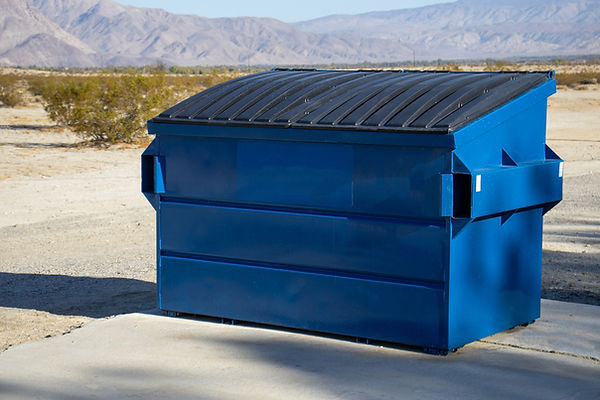
He stopped just in front of an old, beat-up blue painted dumpster.
He stopped, and he just stood there. “Go look for yourself.”
I figured that we’d just play along and see where this gag was headed.
Bob flipped open the covers and there they were.
Crudely, savagely severed body parts.
And there was a lot of blood.
There was a leg cut off above the knee.
There was a leg cut off above the ankle.
There was a severed hand lying next to a hacked-apart arm.
There was pretty much every body part you could think of, except for the heads.
No heads.
He began to giggle, standing there behind us.
He began to cackle and cough as he laughed a little harder.
Bob and I glanced at each other and Bob lifted his shirt over the knife sheathed into his belt.
We turned to face him.
He murmured, “I told you guys! I told you I’m a killer!”
I coldly replied, “Ok, I get that. I can see that. But…why are you telling us about it?”
“Because I want people to know that I’m a killer. Everybody HAS to know that I AM a killer!”
“Yeah, but why?”
He began to tremble in an obviously growing rage. His eyelids began to twitch, and his fingers flicked in spastic circles. He was coming undone. He was now clearly agitated.
Bob barked out, “So what? Who cares? I’ve seen worse.”
His last binding thread then came unwound, and he lunged at both of us.
Bob already had his knife drawn and palmed by the time he got to him.
That gave me a split second to grab a pipe wrench from the dock table.
As Bob stuck him, I cracked the wrench down across the back of his head.
He staggered backwards and drew his own knife – an overstated butcher knife more for effect than work.
Now the three of us squared off on the shipping dock.
Every cut against him was matched with a knock from the pipe wrench, but always in a different spot…creating pain and confusion everywhere in him.
He took a swipe at me, but when he missed my face, he kept swinging until his blade filleted Bob’s arm, laying him wide open. This angered Bob. I never remember seeing him so angry, before, then, or since.
Bob went nuts.
He lunged at him and hacked and sliced and stabbed and butchered until everything stopped moving around us. Until everything was quiet.
The guy lay there in a pile in front of the dumpster where he had dumped so many body parts.
“What do you want to do now?”
Bob wiped the blood from his knife and holstered it back under his shirt.
Bob lit a cigarette and, in such a defiant tone, said, “I say we respond in kind.”
He chugged on his cigarette as he walked over to the shipping bench.
He returned with a couple of utility knives and carton saws…and a devilish grin permanently stuck on his face.
He tossed me a knife and a saw. I nodded to him. He nodded back.
And we commenced to butchering.
We gave him the same treatment he gave whoever it was that he killed…with one exception.
Bob took off his head. He held it up as though he were admiring a well-earned trophy.
Looking back, I guess that is EXACTLY what he was doing, but at the time, I wasn’t going to even mention it.
He tossed the head at the dumpster so that it bounced off the lid and fell inside.
Bob checked to make sure that the head was right on top of all the other garbage…and on top of his victims’ remains.
We finished our shift and went to the bar for a couple of beers, to shoot some stick, and talk over what had just happened.
I don’t remember it ever bothering me. Not one bit. Not one iota.
Who can figure?
Over the next few days, an odd smell began to rise and linger.
And it took them almost as long to check it out and find the body parts.
One night, Bob and I clocked in as usual and headed over to the shipping dock.
Everyone was gathered around the dumpster.
They hadn’t even called the police yet.
They almost seemed to be marveling at the carnage.
Some people these days…who can figure?
I said, “Wow! Look at that ugly melon! Why do you think the killer left only THAT head in the pile.”
Of course, no one answered. They just stood there in awe of what had been left by the butcher.
Bob said, “That guy was just piping-off about what a great killer he could be the other night!
Now look at him. Not so great, I guess. I guess he wasn’t a killer at all!”
The police finally showed up, and once the investigators and coroner did their thing, the mess was eventually cleaned up.
Life went on in the shop.
A couple of weeks later, they hired a new guy to work the night shift with Bob and me.
A skittish, red-faced kid, kind of lanky, who was perpetually on edge.
Bob said, “C’mon…let’s go take a break out back.”
The three of us went out to the shipping dock, and Bob leaned back against that same, beaten-up, blue paint dumpster. He handed me a cigarette and offered one to the new kid, too.
He lit one for himself and took a long, deliberate drag from it.
As he let the smoke fall out of his mouth, he quietly murmured to the kid as he looked up at him, “Did I ever tell you that I’m a killer?”
Frank Weber is a freelance writer from Erie, Pennsylvania. He is a published author and writer, featured in several magazines, anthologies, books and advertising campaigns as both writer and model. Frank’s work encompasses a simple honesty in written word and enough of a raw edge to make people feel what they read.
The Cut by Brian Connelly

Darrell squinted and glanced upward. The pair of red-winged blackbirds was still fluttering about in the distance, close to the ground. It was the best sign - the only sign - he'd seen of nearby water. His horse, a mustang with scorched-iron hair and a mane like a storm cloud, was heaving now.
“Come on, Lucy. I don't have it in me to trek the rest of the way.”
Following the birds, he found a watering hole and led his horse there. His mustang thrust its mouth into the water and gobbled it down, the sweat-sticky, knee-high dust washing off. Beaten by the constant heat and sunlight, Darrel knelt, cupping a bit of water for himself. He felt on the verge of defeat, but he knew what that would mean for a man with his... condition. No matter the hunger, he had to press on.
The blackbirds continued to circle above.
The rare quiet was interrupted by the trampling of hooves. His mustang looked up. Darrel pushed himself to his feet. “I'm sure they'll be on their way soon.”
Lucy resumed drinking. Beyond the hot waves of air, Darrel could make out a group of riders headed his way. They did not look like they'd be on their way soon.
The riders stopped a few horses' length shy of Darrel. The man at the front of the pack, an embarrassingly plump individual, wearing a cheap derby and pale-colored suspenders, slid off his horse, a mangy mutt of a beast, and stomped towards Darrel. His four fellow comrades eyed Darrel greedily.
“Howdy, fella,” the stout gentleman called, walking towards him. “Nice horse ya got there.”
“Yeah,” Darrel started. “The man who it used to belong to thought so, too.”
The heavy man - now just one horse’s length away - studied Darrel carefully, finally focusing on his belt. No holster. “I'm sure neither of us want to be in this godforsaken desert longer 'n we have to, so I'll git right down to it. I'll be needing yer horse. Hell, yer fancy hat and boots, too.”
Darrel took his hat off and looked at it. “I'm kind of partial to this here hat. Wish I could oblige you with your other respects, too, but, given the circumstances, I'll have to decline.”
The man let out something between a grunt and a chuckle. “Yer not armed.” He pulled out a ten-inch Bowie knife. “I am.”
“I'm not here to negotiate,” he continued. “But I'll be real nice and offer ya this: we'll just take the horse, leave you with yer pretty hat and boots, and then we won't cut ya up into a dozen pieces, strew ya 'long the road from here to Stockton. Sound good?”
Darrel squared up to the man and took a breath. “I reckon it don't.”
The man grimaced through gritted teeth. “You half-cocked little... I've come f'r yer goddamn horse, and I'm gonna take it!”
He waddled straight to Darrel's mustang and reached his chubby fingers for the reins. Darrel's tight, rust-colored gloved hand instantly wrapped around the man's fingers, a grip an inch away from breaking knuckles.
“Don't,” Darrel said simply.
“Boy, you 'bout t' get the devil with his horns on…” the man said as he brandished his knife.
The man swung his knife, and it nicked Darrel's pinky finger, cutting clean through his glove and drawing blood. Darrel looked over at the company of hardened faces. Darrel took in a deep breath and removed his gloves, letting them fall with a muted thud.
“Really hope your mamas aren't still alive to see what's gonna be left of you.”
“What in tarnation are you…”
Something raw and sharp peeled his blubbery stomach open. Darrel's hand was now rich with blood. His men, thinking Darrel somehow got hold of the Bowie knife, charged forward on their horses, blood boiling with the heat of revenge.
Darrel's eyes swirled as crimson as the blood on his hands. His hair had grown longer and silkier, and his nails elongated and hardened. He waited until they were close. As quick as a lightning bolt, he leapt forward and swung. Two of the gang members went limp like rag dolls on their horses before tumbling to the ground, throats slashed open in three places, blood pooling on the dry earth.
Darrel swiftly flanked the rest of the gang. Their mouths were agape in a mix of horror, bewilderment, and rage. One man pulled out a rifle he had straddled alongside his horse, but before he could even cock it back to load a bullet, Darrel was on top of him, sending him reeling off his horse, pinned to the hard ground, the wind knocked out of him. He felt something hot and liquid running down his neck as he struggled to get up from his prone position, gasping for air.
The men's horses whinnied wildly, trying to dash off in different directions. One of the remaining gang members tried resisting his horse's will and spun back around to face Darrel. All he saw was a blur across his face. His eyeball burst, nose split in two as teeth flew out of his mouth.
“You son of a bitch! I'll kill you, I'll…”
Something hard and sharp pierced his back as he tumbled off his horse. He gurgled and convulsed on the ground, eyes begging the dry, coarse sun for mercy.
Darrel stood over him, watching the blood ooze from his dying lips and out of his back. He knelt, his eyes now embers.
“Our luck has to run out sometime, don't it?”
He stood up, heading back to his horse, leaving the man choking in the hot sun.
'Don't nothing good grow out here,' he thought. His mustang took one last gulp of water and looked at Darrel. Darrel hopped back on his horse as they trotted west.
Brian Connelly is a short story/flash fiction writer whose work has appeared in Down in the Dirt, Academy of the Heart, and AntipodeanSF. He works at Purdue University supporting student leadership development. When he’s not writing, he’s likely reading, building playlists, or spending time with his family in a college town in Indiana.
Threads: https://www.threads.com/@hijodeganas
Instagram: https://www.instagram.com/hijodeganas/
Roam Alone by Matt Durante

Kelvin didn’t worry about cleaning up anymore. It was way too much blood to even bother. When you shot a few ripsaws at a person, the splatter was something to see. He took pictures, of course, for his private collection. But where he used to actually clean things up, now he just burns the place down and moves on.
After all the planning and all the work, Kelvin lived for the few sweet hours each year when he was in control. It was the only thing that made him feel anything anymore. He’d never been able to have a real relationship. He didn’t speak to his family anymore.
It was a simple honeypot. Put the word out about a wealthy family leaving for vacation, advertise in the right places online, and before you knew it, every opportunist around was ready to knock down the door to get to the goods. He vetted the perfect two, and he was off to the races.
He ate another slice of pizza and then jammed a fistful of gummy bears into his face. He didn’t chew thoroughly, but rather washed it down with a giant swig of his soda. He laughed with glee as his laptop dinged. He watched on his monitor through the cameras he’d set up. It was showtime.
The one he called “Mark” came through the basement. The floor wasn’t exactly moving, but something was. By the time Mark realized it was filled with snakes, it was too late. When the unwary burglar started screaming, Kelvin clapped with glee. That trap took a lot to set up. Getting a hold of that many venomous snakes on the sly was challenging. Kelvin was proud of that one.
Then there was the guy who Kelvin called “Gerald,” who went up the ladder, conspicuously left next to an unlocked second-floor window. The man opened the window and found it would only open a third of the way. Still enough to slide through. He considered not going through, but the ladder fell away, triggered by Kelvin. Gerald had no choice but to crawl through or plummet to the concrete below. It was the razors on the windowsill that got him first, slicing through his forearms and then into his belly as he pulled himself inside.
He’d nearly gotten his legs through when he heard the hydraulic wine and then KERCHUNK. There was a cold splash of pain as he looked back. His legs had been severed just below the knees by a pneumatic guillotine. It took a moment for the realization to register, never mind the pain in what remained of his shins. He screamed as he pulled himself through glass shards and salt that had been spread all over the floor. The blood ran out fast, though, and he soon passed out, lying in there like a dead salted slug.
And just like that, it was over. Another Christmas gone by. So much planning. It was done. The other traps seemed like a waste, but that was part of the fun, seeing which ones and how many they’d choose. He always wondered whether or not he should get more to attend or whether he could chance making the traps less lethal.
He shook his head. No. Two of them were enough. Two a year was manageable. He could do two a year. It was tradition after all. Any more than that and it would start to get sloppy. Imagine if one got away. No, he’d keep doing two. And he’d ensure that the traps were not survivable.
He keyed the password on his computer and commenced the burning.
Later, Kelvin watched the recording on his laptop while listening to Jingle Bell Rock and noticed a slight movement in his pants and a tightening in his custom-made adult GI-Joe tighty-whities. He’d think of this moment later when he picked up one of the prostitutes he’d become familiar with over the course of the year. She had red hair. She was familiar. The service was specific. He needed her to pretend to be his mother and curse at him. Call him no good. Tell him he deserved to be punished. To be alone.
He sighed. He felt relief and joy, mixed with that familiar melancholy that so many feel at the end of this most joyous season. Kelvin went back and forth. It was sad that it was over and that he’d have to wait a whole year to experience the happiness of the holiday again. But Christmas only came once a year and that’s what made it special, right?
A Treat for Alisande by Brian Sellnow

Halloween, and Mommy had said this year was special because there was a full moon, something people only saw four or five times in their whole lives. Becka’s witch costume was perfect, just the right balance of cute and scary, and she had filled up two bags with candy from the neighbors. The other kids said that she was being greedy, and she would never eat it all, but it was okay because one of the bags was for her friend Alisande.
Alisande lived in an old house next to the woods, and she was a year older than Becka but didn’t act like it. She didn’t have many friends, and her parents were from another country, and they were strict with her. Alisande’s father was nice, but her mother was kind of scary and overprotective. So, it wasn’t a surprise that Alisande wasn’t allowed to go trick-or-treating with the rest of the kids.
It was really late now, and there weren’t many people on the street. Just a few teenagers wandering around, but all the houses had their lights off, meaning no more candy tonight. Becka sorted through the candy in the second bag, pulling out the stuff she wanted most. There was still a lot left, and Alisande would be happy to get it. Becka picked it up and headed for the front door, still in her costume. Alisande would love it.
Her own mother looked up from the couch, where she was reading a book. “You’re taking the candy tonight? It’s late!”
“I promised her I would,” Becka protested. “And I want Alisande to see my costume.”
“Well… be careful. And don’t stay too long. It’s already way past your bedtime, and probably theirs too.”
“I’ll be right back,” said Becka, even though maybe she would stay for a little while to talk with her friend. Sometimes she felt sorry for Alisande.
The moon was higher now, shining brightly on the street and houses. That was good, because there weren’t many street lights around here, and all the house lights were off. It was getting cold, too. Becka hurried to Alisande’s house, the heavy bag bumping against her leg.
The lights were off at Alisande’s house, like everywhere, and here at the end of the street, there were no street lights at all. Becka looked closer – the living room curtains were closed, but there was light coming from behind them. So they hadn’t gone to bed yet. She walked up the stairs to the porch and knocked on the door. Then she heard a growl behind her. There was a big dog at the edge of the lawn, watching her. It was bigger than any dog she had seen, and its teeth glowed in the moonlight. It started toward her, and then she heard a howl from the other side of the house, and there was another one, even bigger, and it was running in her direction.
There was nowhere for her to run.
Becka pounded on the door. “Let me in, please!”
The door opened, and Becka pushed into the house, almost knocking her friend over.
“What’s the matter?” asked Alisande.
“Two big dogs!” Becka gasped. “Right outside, I thought they were going to eat me!”
Alisande closed the door. “Let’s go to my room.”
Alisande’s room was on the second floor. It didn’t look like a girl’s room, or anyone’s room, really. Just a bed and a dresser, and one doll. No stuffed animals, no pretty pictures on the wall. The window was open, the curtains waving in the breeze, and white moonlight spilling across the floor. Alisande followed Becka into the room and locked the door, but she didn’t turn on the light.
“I brought candy,” said Becka. She had almost dropped it outside. “And I wanted you to see my costume.”
“Scary,” said Alisande, and her voice sounded strange.
“Whose dogs were those?” asked Becka.
“They aren’t dogs. They’re wolves.”
“Wolves?”
Alisande nodded. “It’s a full moon tonight. The wolves come out, and they’re hungry.”
Becka had never heard of that, and didn’t want to think about it anymore. “I brought your candy. Let’s have some.”
“Mother says I can’t have candy until after supper,” Alisande replied. She walked toward the window.
“It’s pretty late,” said Becka. “When are you going to eat supper?”
“Now.”
Alisande stepped into the moonlight, holding out her arms like she was getting a tan. Hair sprouted on them, and then her ears and teeth grew longer, and her face changed, and it was covered with fur as well. Becka was locked in a room with a wolf.
“Now,” it growled.
Brian Sellnow is a retired Air Force sergeant who lives in Las Vegas, where he writes science fiction, fantasy, and horror stories, and occasionally smokes cigars on the patio.
Brushstrokes by Felicia Carparelli

On the eve of the wedding, Milly brushed Alicia’s hair. One hundred strokes. She counted aloud, in a low voice, more a hiss than a whisper. Her daughter sat stone still, wrapped in an ivory satin robe. The silky strands of auburn hair flowed to her daughter’s tiny waist. No one should have a waist that small, Milly thought, brushing harder. It was indecent, and confirmed her belief that Alicia had been spawned by the devil. Yes, she had emerged from Milly’s peri-menopausal womb, but she could never believe that her dull husband had contributed to this beautiful woman. Milly took thirty seconds to rest, then began the ritual again. The boar bristle brush, a family heirloom, sterling silver with an ivory handle, was heavy. Her wrists ached.
Alicia was tall and slim with a fair complexion and peach-tinged cheeks. Her lips were always poised in a smile. She was a Disney princess without ever trying. Alicia had been born sweet and had never lost her innocence. People were drawn to her, and little animals licked her hand. Her aura was rose.
Milly, short and freckled, with a strut like a bantam cock, sported spirals of fiery red hair. Her ex-husband, in a fit of anger, had called her Chucky. Her dazzling white veneers were blinding. Sometimes people crossed the street when they saw her. Her aura was ebony. She hated her daughter, but still, she was her mother. And mothers prepare their daughters for their wedding, don’t they?
Milly continued brushing long into the night, replaying the slings and arrows that had ruined and pierced her life, her chances of happiness. Alicia sat stone still, perhaps replaying her own life, thinking of the meds her mother had tried to cram down her throat, to make her thinner and smarter. Milly was competitive with her friends, family, lovers, and most of all with her beautiful daughter. She had wanted her to succeed and be the best, even though it secretly killed her and shrank her heart into a leathery amulet of hate.
In the morning, when the wedding party came to collect the bride, they found her sitting in the same chair, stone still. Her satin robe was spattered with blood, a pattern that could only be caused by the continuous brushing of a boar’s bristle brush, which had been laced with razor blades.
They found Milly in the garden, dancing among the roses, with a red rose between her teeth. She wore the wedding dress that was too tight, too long, and speckled with drying blood. She was flushed with ecstasy, with a release she had never known from the touch of a man, and this suffused her freckled face with a fiery glow that matched her always hated, but never to be forgotten hair.
Felicia Carparelli is a special education teacher writing in Chicago. She has work published in Mystic Owl, Scarlet, Sinister Wisdom, Galway Review, The Rhubris, Flexx Mag, Tiny Love-New York Times, and Coping with Cancer. She plays her accordion during the full moon. She is inspired by Patricia Highsmith and Edgar Allan Poe. Her Sapphic mystery, Tile M for Murder, Bella Books, February 2024. Her thriller, Killing Mr. Darcy, darkstroke Books, 2022. Her modern lesbian retelling of Pride and Prejudice, Wife Wanted, Blue Blood Only, Bella Books, April 2026. She is a queer, senior writer. www.feliciacarparelli.com
Wet Matches on a Dark Christmas Eve by Aza Smith

People were scrambling for holly and mistletoe the day before Christmas. They ignored little Maria, desperate to trade her meager supply of matches for pennies. If she came home empty-handed, her father would be upset, and so would his belt. Even on good days, she would go home to find him drunk and rambling about how good their family had it when he was her age.
“It was me mam,” he would say. “Wuz all her fault. Sugar cane’s worth nuthin’ with the cheap wood of ‘er ships. Rottin’ ole bitch took her own life and us with ‘er.”
Maria struggled to keep herself warm, her socks wet from the snow and her shoes full of holes, while people ran to their homes and locked their doors. The homeless, with no doors to lock, jumped at every shadow. She had no pennies and barely enough matches to light her way through the city streets. Her family barely had the money to afford coal. They would have to go without gifts or supper, but they had to save enough for holly. Holly and mistletoe were as precious as gold this time of year, either bought in bulk by people of means or sold at paupers’ quality for a prince’s ransom.
The sun was setting. It wasn’t safe to linger, especially tonight.
She took a shortcut between the butcher's and bakery, blind in the dark past the fog of her breath.
She lit a match.
Something in a brimmed, feather hat and tattered wine-colored dress was in the alley. She turned to Maria. Her eyes were glassy, her face caked in old, cracked makeup, attempting to bite open an expensive purse she was carrying with a mouth missing half its teeth and surrounded by sores. Once she may have been beautiful, but now her wretchedness was exposed.
The matchgirl backed away when it limped toward her, only to back into another.
He was grotesquely fat, dressed in a suit three sizes too small, his ruffles stained. He vomited at the frightened Maria’s feet, spilling heaps of old pennies covered in bile and ectoplasm. He reached his bloated arms out to the girl, and she ran the other way.
The Lady, her throat humming like petrified wood, lunged at her and stumbled.
“Mine!”
Maria sprinted out of the alley and onto the other side. During the day, people crowded the streets. Now, there was only the dead.
They wore the finest clothes and tortured looks wandered in a haze, some banging on the doors of the more opulent homes like carolers, holly and mistletoe protecting the inside from intrusion. The ghosts walked through the doors as though they weren’t there, and the walls of poorhouses, those who couldn’t afford the greenery to keep them out, howled the screams of dying men, women, and children through the night. Maria had only experienced the horrors from outside her window throughout the years, her father holding a hand over her mouth to keep her from crying out, pleading for all of them to stop before exhaustion calmed her to rest.
“Parasites…”
“To the workhouses for your debts…”
“Who will pay? Who will pay?”
They spoke to only themselves, sins of history haunting the present and bankrupting the future.
Exposed, Maria tried to run to the other alleyway, knowing her family’s flat was only a few blocks away. A massive safe pushed itself in her path like a mobile wall, its pin release lever spinning and the door opening, and a flood of bills and documents spilled out as a trio of skeletons chained together tried to grab her with their fleshless arms from the inside.
“You…”
“...owe…”
“...us…”
Her shortcut blocked, she took a detour through the open streets, and the financiers, merchants, lenders, skinflints, seducers, moneylenders, confidence men, and misers damned to walk the Earth for their harvest followed closely behind.
Maria banged on locked doors, begging for someone to open their doors. She abandoned the well-lit occupancies and prying off a loose board on the window of a dilapidated building. She leaped through and gasped. Orphans and vagabonds lay lifeless by a flameless chimney, one unfortunate little girl pinned down as spectral ladies-in-waiting fought over her. She found a room and slammed the door behind her. Her body struggled to take in the chill of the air. A pair of skeletal hands reached through the door like a curtain. A bug-eyed skull in a white wig looked down at her.
“Mine! All mine!”
It tried to grab her, and she ran through an open window across the room.
She reached her family’s front door. Maria banged on the door, begging to be let in, but received no response.
A hand landed on her shoulder.
She dared to look back and saw an older woman. She looked just like the photograph of her grandmother, but with a white shirt stained black from the wound in her throat. She opened her mouth, her death rattle drowning in the black ichor spilling out. Her jaw dislodged, grip tightening, and darkness fell upon Maria.
***
The next morning, Christmas Day, came the corpse collectors, hired to clean the streets after the terrible night.
Vagrants, migrants, late-shifters, factory-workers. Orphans, old maids, laborers. Covered in snow and ice, frostbite painting their lifeless expressions, they were found and brought into wheelbarrows to be burned or buried.
A coroner found a small girl slumped against a door. Her face frozen in terror. He pried her fingers open to see what she was carrying and found a matchbook. He inspected it, deemed that it was still good, and pocketed it before hefting the girl onto the pile.
One last gift from the matchgirl to him this Christmas Day.
Creepy Jack by Dakria

“How’s your mother, boy? Oh, yeah… dead. Because of you.” Creepy Jack’s lips curled into a sarcastic smile. One crooked tooth jutted out, breaking the symmetry of his face.
The boy didn’t flinch.
“At least I had one. Did you ever know yours?”
Creepy Jack froze, barely. Inside, he was boiling. The boy was getting under his skin, stealing the spotlight in his own house of horrors. The funhouse was his instrument, every surface tuned to echo the truths people hid from themselves and others. One clap, one gesture, and the mirrors laid bare the darkest corners of their souls. Most broke. Some left screaming. Some never left at all. The asylum was full of them.
But this boy was different. His name was Jack, too. Ironic, wasn’t it?
Creepy Jack raised a hand. The mirrors blazed with light. The boy’s reflection stood bare: cigarette burns, belt welts, bruises that had faded into memory but never into pain. Anyone else would have turned away, curled into themselves. Not him. Young Jack didn’t even blink.
The silence cut deeper than any scream.
For a heartbeat, the mirror overlapped the two Jacks, bodies aligned from legs to eyes. Only the crooked tooth marked a difference.
“You think that makes you strong?” Creepy Jack hissed. “Surviving doesn’t make you untouchable.” Every muscle in his body tensed, aching to crush the boy. “You should be on your knees, broken. That’s how it works. That’s what the world expects.”
His voice cracked, rage flaring into panic. “You cheated pain! You don’t deserve my attention.”
The light snapped off. Only the yellow eyes of the old clown glowed in the dark.
But Young Jack did not move. Calm radiated from him, louder than cruelty itself.
Creepy Jack flinched. Rage surged uncontrollably. His body twisted, the mirrors shattering around the boy, but still, Young Jack stayed still.
“Why? Why? Why?” the clown screamed, frantic. “Why do you act like such a… bastard?”
“You cannot hurt me, can you?” Young Jack’s voice was steady. “Even if I could, you… could not.”
The words hit like a revelation. Creepy Jack stopped. He could not. The light flickered back on, revealing the shattered mirrors, faces of both Jacks blending in infinite fragments.
Creepy Jack’s gaze met Young Jack’s. A sarcastic smile crept across the old clown’s face, revealing the crooked tooth. Something had shifted in his eyes.
He stepped closer, slow, deliberate, terrifying. Young Jack’s hands touched the mirror behind him, trying to retreat, but the old hands closed over his shoulders. He jumped, letting out a cry. The light cut out.
When Jack turned his head, the funhouse was empty, silent, as if abandoned for years. But he knew it was not.
When his gaze met the yellow eyes in the mirror, he turned back. A crooked smile spread across his face.
Dakria writes dark short fiction, specializing in flash and micro stories that blend psychological horror with surreal fantasy. Her work has been published by Black Hare Press, 101 Words, Air & Nothingness Press, Reach Your Apex, and Merganser Magazine. She is also the founder and editor of WATG Press. More at dakria.de
Lurker by Floyd Largent
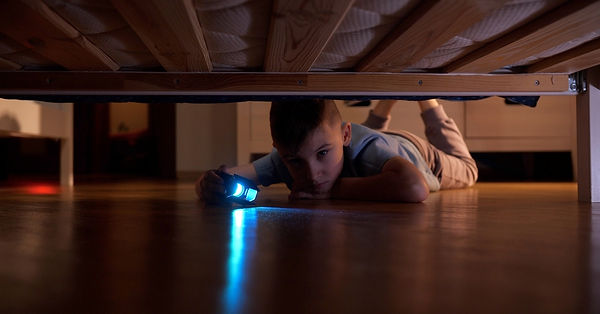
It was quiet under the little boy’s bed.
The air was a bit musty, stale from lack of movement, full of dust and the ingrained scent of old fear. The lurker lay there smiling, sharpening his claws, knowing that the whisk-whisk was just barely audible (but all-too-audible) to his tense listener. If anyone else had heard that subtle, surreptitious sound, they might have been reminded of the resonance of a whetstone on a steel knife... but it wasn’t that, no. The listener wouldn’t know what to make of it, except to be worried, and he certainly wasn’t going to sleep or do anything else tonight.
This was the lurker’s third target this month, and by far the best. He looked forward to adding a trophy from this one to his collection box.
He ceased his claw-sharpening suddenly and listened to the taut silence that followed. The target — the tango, as they called them in the assassin movie the humans had watched the night before — finally started breathing again, in quiet puffs that signalled anxiety to the lurker. Smirking, he quickly moved a leg back and forth, generating a rustle that instantly brought the silence slamming back down as the tango held his breath again.
The prey knew the predator was there, waiting, preening, ready to pounce and feast on the condensed fear, to pierce the throbbing little heart with his claw...
“I-I’m not afraid of you,” came a whisper in the dark, the fright so thick and pungent that it sent eddies through the air under the little boy’s bed, and throughout the entire bedroom.
“Oh, really?” the lurker whispered back, his voice so low it almost wasn’t there. But his sharp smile was audible in his taunting reply.
“No!”
“Ha, of course not,” the lurker replied in his normal speaking voice, which was growly and harsh, in keeping with the beast that he was.
“You... I, I’ve heard of you,” the prey gasped. “They say you’re some kind of demon! But I’m, I’m no threat to you, so why can’t you just leave me alone?”
“Because it’s not in my nature to leave whiny little bitches alone.”
“But I’m supposed to be here!” cried the tango. “They assigned this bed to me! This is my bed!”
“It was my bed first!” bellowed Tommy Farragut, as he drove one of the thin, sharpened rebar spikes he called his “claws” down through the mattress and box-spring, via the prepared hole, and straight into the chest of the monster under the bed. There was a strangled urk! and a little thrashing, but by then the monster was already dead, pierced through the heart — it just took a while for its body to realize it.
Tommy slipped off the bed, rubbing his throat where his first foster father had slashed it with a broken beer bottle four years ago, leaving him with the raspy, guttural voice of a 70-year-old chain smoker. He got down on his knees and peered under the bed to find the critter — a feathery, adorable thing half the size of an adult man, with a short beak and talons like small scythes — shish-kabobbed by the claw and staring into infinity. At least this one was pretty. The last monster under the bed had been a slick, chitinous spider-thing with too many legs.
With a broad smile, Tommy went to his dresser and removed a long wooden box from the bottom drawer. He placed the box on the carpet and got down on his knees again, then opened the box to take out his real daddy’s Bowie knife. He pulled out a couple of the monster’s downy feathers, but that wasn’t enough. Hmmm. He was tired of ears... how about the beak this time?
He reached out with the knife and started sawing.
The Bouquet by Wendy Cooper

The bride winked, then turned, eyes veiled in shadow. Laughter rippled like confetti across the white-tented lawn. The bouquet arced like a Hail Mary pass, all eyes following its flight. Women scrambled, reaching for pink roses wrapped in a gold ribbon.
A woman whose smoky, smudged eyeshadow and lipstick seemed painted on by trembling hands caught it. She held the bouquet aloft, beaming, like a replica of the Statue of Liberty. The crowd burst into cheering and clinking glasses.
Smoky’s smile wilted as the women drifted away, leaving her alone. Cold roots sprouted, snaking around her ankles, tightening. Vines slithered from the bouquet, hissing, binding her wrists in green. Thorns pricked her skin, teeth sinking in. Breath loitered in her ribs, waiting for permission to leave.
Champagne corks popped. A photographer shouted, “Smile.” Guests clapped, oblivious.
Her heels disappeared into the dirt, the ground taking her inch by inch. She tried to drop the bouquet, but her fingers refused. The stems pulsed, alive, in her palms. Something inside her went still: the ghostly hush left hanging after a choir’s final note.
A barefoot young girl on the gathering’s edge fled into her mother’s arms.
Fine cracks traced Smoky’s skin, sketching a path.
The bride’s grandmother sighed. “Another one gone.”
Laughter bubbled. Drumsticks hit the bass thrice; the band swelled. Guests leapt to their feet and swarmed the dance floor, a stampede of dad-like coordination.
Smoky’s wide eyes met the bride’s through the blur and commotion.
The bride’s mascara glistened. She mouthed, I once caught it too.
Everything turned black.
Born and raised in England, Wendy now lives in Vancouver, BC. She is the recipient of a Canada Council for the Arts grant and the founder of the Autistic Writers’ Group. Her fiction has appeared in Mystery Tribune, The Last Girls Club, and Black Hare Press, among others.
Time's Up by Stephen Hunt

Alastor peered over Richard’s shoulder to view his reading material. “Have you found me in there yet, you piece of shit?...... It’s about time you started looking in the right place.”
Richard was tired. Tired of reading and tired of pain. He turned a page to find a grotesque visage leering at him. A dog-sized snout and jaw set into a mocking grin, baring animal teeth, and eyes, cruel and intense, portals to a history of excruciations that stretched across Millenia. Feral hair flowed backwards, and each sinewy hand gripped an instrument of torture: ancient steel, fashioned for incision.
Alastor ran his tongue across Richard’s ear. “Recognise anyone, you stinking old fool?”
Richard rubbed his ear as he read the caption below the hellish illustration, taking a moment for contemplation before Alastor sank his teeth into his earlobe. Richard winced, slamming The Encyclopaedia of Demons and Demonology shut.
“Good,” said Alastor, “enough learning for one day…. And forget about exorcism and any help from those filthy clerics. I never dwell within.”
As Richard massaged his earlobe, Alastor sidled from behind Richard’s studded leather armchair and knelt at his side. He pushed his stiletto dagger into the hinge of Richard’s knee. As Richard yelped, Alastor’s nostrils flared, harvesting the musty air.
Richard and his armchair groaned as he struggled to his feet. Alastor gazed up at him.
“You always were stoic, Richard. Even as that forlorn young man I sniffed out all those years ago. Only I see the scars I give you. Only I can smell your blood. You’re all so blind in your realm.”
Richard looked into the antique mirror above his mantelpiece, carved giltwood, the glass smoked and tarnished. He didn’t need the mirror to tell him he was close to death. A familiar shadow flickered behind his image. He bowed his head, awaiting the pain.
A foul gust agitated the embers of Richard’s fire. Flames, quicker than Cobras, reared up to singe the moleskin of his trousers. As he stepped away, bending to brush away the soot, Alastor began to carve into his Achilles tendon. Weakened from whiskey and a lifetime of torture, Richard buckled, overwhelmed by the sickening pain. His knees entered the fire, his upper body flaccid, wilting backwards until his lolling head hit the flagstone floor, and Alastor heard the merciful snap of his neck.
Crouching next to Richard, Alastor addressed him for the final time. “Enjoy the purgatory, Richard…. there’s worse to come.”
A week later, the police and paramedics entered Richard’s house. Alastor sat in the leather armchair, legs crossed, taloned feet fidgeting. He gave the female police officer and paramedics a disdainful sniff, but scrutinised the young male forensic officer, squatting beside Richard, his mask failing to disguise the distaste on his face.
As the officer stood up, he noticed a trail of droplets spattering on the flagstone floor, seconds later an explosion of pain in his back forced him to his knees. Alastor stood behind him, short sword buried to the hilt, his saliva-drenched tongue caressing the young man’s neck in animal lust.
“Michael?” The female officer dashed to his side. “What is it?”
Michael grimaced, sucking oxygen. “I don’t know… probably a muscle spasm. I’ll be fine. Just need to catch my breath.”
“You will be fine, Michael,” said Alastor. “Such a beautiful canvas you are. So pure, almost an angel.”
On the journey back, Michael sat alone in the back of the forensics van, a burning sensation searing the right-hand side of his face and neck. He turned and smiled into the empty space beside him.
“I feel the heat and foulness of your breath.… And soon I will see you. It’s been a long two thousand years, Alastor, but finally…. I hath found you.”
Stephen Hunt is a fifty-nine year old injection moulding technician from Burton upon Trent in the heart of England. He has a self-published novel on Amazon, and has written several short stories. He writes for fun and a creative outlet and because strange ideas just seem to turn up in his head. His stories all have a speculative or horror aspect, where he tries to create an otherworldly atmosphere. This is his first published work.
Tilling the Leper by David McElvenny

He was walking up the stairs with a handful of shopping when he heard the creak of the floorboards overhead, and with his right boot mid-air, he lowered it to the step above, taking his time as he peered up at the ceiling. There shouldn’t have been anyone up there, no one ever went up there, and there was no chance that he’d have left a window open, allowing wind to rush into the room, which could have been a possible explanation for the creaking floorboard. Jason Tiller made sure to lock his room thoroughly before leaving for work because he was not a man who liked to leave any room for error. If he’d been a man like that, then he’d not have lasted as long out in the world as he had, moving through the sea of scuttling rats like a phantom unseen.
He worked on the production line of an electrical component manufacturer, and he hated every second of it. However at work with his colleagues he wore the mask that was expected of a man of his age, knowing that if those around him knew what went on behind his blue eyes then they’d hound him out of town like a leper… either that or they’d call the police and swiftly, ferrying him off to the gallows with all haste, roaring and baying for his blood as they did. He liked the thought that he was an unknown wraith, a simple wolf striding amongst the sheep, but what he didn’t like, and not one bit, was the thought that someone was up there in his room.
With a steady hand and a slow bend of the hips, Jason placed the bag of shopping to the side of the step that his lead foot was resting upon, and then, with the grace and skill of a ballerina, he glided up one step at a time to his apartment door.
As he went up the stairs, he looked at the two other doors on his floor, both of which belonged to young women, freshly spewed out from the university, and both unknowingly living under the roof of a wolf. Amy Fletcher, red of hair and tall and slight of frame, and Emma Hendle, blonde of hair and short and subtle, both said hello to Jason whenever they saw him in passing within the building, and both had smiles as pure as white gold, but neither one of them knew what went on behind his blue eyes. Jason kept those juicy thoughts to himself as he waved goodbye, wishing them a good day and at the same time imagining what he’d do to them in the soundproof chamber he’d constructed within his apartment.
He noticed that the front door to his apartment was locked and that there was no sign of a forced entry. How odd… He thought as he reached into his pocket and removed the key. His fingers didn’t tremble as he slotted it into the keyhole, moving with the slow and steady hand of a surgeon as he turned his wrist and opened the lock. He did it so slowly that there was no click, and then once the door was open, and his apartment was once again open to the world, Jason wrenched the door wide and slid inside, expecting to come face to face with the intruder.
There was no one.
Not a shadow. Not a slither. Not a hair. Nothing was out of place, and his wide and tall oak-furnished apartment seemed to swirl around him as his mind struggled to rattle through what could have caused the creak that aroused his curiosity. He looked over at the window and saw that it was still locked as it had been that morning when he’d ventured back out into the world. ‘Odd,’ Jason whispered in the silence of the room. ‘Nothing snags the mind. Nothing.’ His eyes scanned the rooms, looking for any trace of an intruder. Then once he was satisfied that he could neither see nor hear anyone else, he went further into the apartment, his eyes snapping back and forth in his skull as he remained as alert as a viper.
He checked the bedroom.
He checked the bathroom.
He checked the kitchen.
Nothing.
There was only one place left to check… Jason Tiller’s soundproof chamber, the one he’d hidden way back in the rear of the apartment, where it couldn’t be seen from the door, and which Jason had constructed after he’d purchased the whole building decades before as an investment after he’d received his inheritance. However, it was not a financial investment; the apartment had been purchased for his pleasure.
He made his way through the dark oak rooms, thinking that any intruder would be a fool to venture down into that chamber.
It lay behind a wall that housed pictures of Jason’s adoring parents who’d perished in a fire that sprang out of nowhere.
Jason unlocked the chamber, then opened the door, and what he found inside was no intruder but a snarling woman, wielding a mallet, who’d been rocking from side to side, painted in her own blood.
Her eyes were wild pits that screamed through a hazel haze, and in those eyes, Jason saw a murderous rage.
‘How’d you get out of those chains?’ That was all he managed to ask before she leapt forwards, hammer raised.
The first mallet stroke struck him in the shoulder, dislocating it and forcing him back.
He tripped, fell to the floor, hitting the back of his skull on the wooden boards.
And then, as the second stroke came hurtling down towards the front of his skull, Jason wondered where he’d gone wrong. He’d checked the locks, and he’d made sure that she was drugged. How had she gotten free?
When the mallet made contact with his skull, he was able to think, oh, so that’s what it feels like… and then darkness grasped him.
David McElvenny was born and schooled in rural Hampshire, England. From the minute he could hold a pencil he wrote stories, however due to their illegible nature no one could read them! David is inspired by authors such as Charles Bukowski, Stephen King and the classic UK film Hot Fuzz!
Sleep Tight by JH Tomen

It started with the HVAC. A mouse had crawled into my AC, nesting between the control wires. It soothes them, I guess, chewing on wires. It’s like being underground, roots always ready to be gnawed on. For me, it meant thousands in damages, sensors broken, wiring to be redone.
“Hard to control mice,” the repairman said with a shrug. “But I hear those bot cats are getting pretty good.”
I looked it up right away. The Fel-Scout-X-300. It cost as much as a moped, but it had to be better than repairing the HVAC every year, no? Besides, the bot required very little maintenance. You put out a magnetic pad for it to charge itself on, set the parameters of its “hunting territory,” and then let it do the rest. It even buried its kills, a fact I learned the hard way when my spring gardening unearthed a pit of mouse skeletons.
Still, it was this experience with robotic pest control that primed me for my next. When my girlfriend went on her girls’ trip to Paris, she brought back bed bugs. I knew, of course, that they were everywhere these days. Like so many things from our great-grandparents’ generation, they had bug-bombed them to hell only to wind up creating pesticide-resistant bugs. But I hadn’t thought it would happen to us.
“Remember to be careful,” I’d said before she left, my anxiety more important than our goodbye kiss. “Check behind the mattress. Change rooms if you have to.”
“Yes, dad,” she’d said, rolling her eyes.
When I traveled, I took a black light and a lint roller, tearing the room apart until I felt it was safe. One run-in with the hideous creatures in college had been enough, granting me a lifetime of hypervigilance. But who could be bothered in the City of Lights? There’s nothing romantic — or even remotely Parisian — about stripping the sheets off a bed.
Thus began our futile saga. Diatomaceous earth, heat treatments, spray after spray — and so much goddamn laundry. Every time, we’d cross our fingers only to wake up with more bite marks.
“They’re good at hiding,” the pest control woman said with the same professional shrug the HVAC repairman had.
“Isn’t there anything we can do?”
“Pray,” she said, laughing. “Though I do hear the bug bots are getting pretty good…”
For the second time, I found myself browsing pest control robots on the internet well into the night. Infrared sensing, one read, genetic tracking, read another. In my normal life, I’d almost entirely shunned robotics. I had human friends and did my own chores. But the existential threat of a never-ending infestation? That was not a category where I was prepared to have scruples.
“It’s…small,” my girlfriend said when it finally arrived, looking down at the two-inch robot.
I’d landed on the ERADICATORTM, the one that had advertised its genetic tracking abilities. Apparently, it would sample the DNA of the bed bugs in your space, ensuring there was nowhere they could hide.
“It’s supposed to be small,” I said, scrolling through the app as I tried to pair the robot to my device. “So it can squeeze into tight spaces.”
According to the advertisement, the robot’s narrow frame could even fit into a wall outlet while hunting.
“Paired,” the robot chimed with a disembodied voice. “Prepared for sample.”
“This part is gross,” I said, prompting my girlfriend to leave the room.
I took out the plastic bag I’d asked the pest control woman to collect a few dead bugs in. She’d charged extra, though she hadn’t seemed to mind otherwise. Holding it at arm’s length — as if they might come back to life — I shook them out in front of the ERADICATORTM. Instantly, a sickeningly long needle unfurled from its snout, plunging into the bed bugs with abandon.
“Sample taken,” the robot chirped after turning the bugs to mush. “Running analysis.”
“Great,” I said, grimacing as I cleaned up the mess. The ERADICATORTM just sat there, humming. It took so long that I was afraid it had frozen. But then, with one last happy chirp, it unfurled its two dozen legs.
“Beginning hunt.”
“Oh, well—” I started as the ERADICATORTM shot off the bed. It disappeared behind the headboard; the only sign of its presence was the clicking of its claws. I shrugged, going out to the living room where my girlfriend was watching something.
“You sure this is a good idea?” she said. “There’s still time to return it.”
“What could go wrong?”
“I don’t know. It uses DNA. We have DNA.”
“Sure,” I said, flopping down on the open cushion next to her. “But we don’t have bug DNA.”
“But our blood. It’s in the bugs, no?”
“Huh,” I said, frowning. “I hadn’t thought of that.”
To be honest, though, by the time night rolled around, I’d almost forgotten about the bot. It was only when I was brushing my teeth that I opened the app, my eyes bulging as I saw the tracker. Four hundred eliminations, it said, the text a bloody red on the app’s black background.
“Holy shit,” I said, my mouth full of toothpaste. “Babe, look!”
“Eww,” she said, frowning. “There were four hundred still in the house?”
I shrugged, rinsing my mouth before kissing her cheek.
“At least they’re dead now.”
We climbed into bed, my girlfriend taking the big spoon.
“This is nice,” I whispered, holding her hand around my chest. “No bugs, no diatomaceous earth. Nothing to do but sleep.”
“Hmm,” she murmured, consistently quicker to fall asleep than I was.
My own thoughts were getting fuzzy, sleep close at hand, when I heard a clicking noise. I opened my eyes, finding the ERADICATORTM right in front of my face.
“Genetic code sequenced,” the disembodied voice said, the needle unfurling from the snout.
“Match verified. Commence hunt.”
I didn’t even have time to scream as the needle entered my eye.
JH Tomen lives in Chicago and works in clean energy. When not writing fiction, he's the author of the climate Substack, The Carbon Fables. You can find him on all socials @jhtomen and at jhtomen.com.
With This Body and Blood by Pamela Kinney

Luis ducked around a dumpster behind Chesterfield Towne Center Mall in Chesterfield. Rotting banana peels, leftover food from the mall’s eateries, and even feces teased his nose as the eleven-year-old boy scrunched himself deeper into the container’s shadows when he heard two sets of footsteps approaching.
Salvo, he prayed in his head, “salvo, please.”
“Hey, John,” called out a male voice, “do you think that coward Luis is hiding in all that stinkin’ crap?”
“No, Porky. I thought I’d grab you something to eat.” John’s laugh sounded like a burro’s bray. “Come on, Devin believes the little brown rat ran down the street.”
Footsteps moved away until Luis didn’t hear them anymore.
Luis extracted himself from the shadow-ridden spot, hoping he could bolt for home before they returned.
“Where are you going, el pequeño?” The male whisper floated out of the shadowy corner.
Luis stiffened, his heart beating hard against his chest like a caged bird. “Who said that?”
“Ah, little one, the bad malo uno wants you, but you can defeat those gringos.”
Luis frowned. “How?”
He should be getting out of there and not talking to some disembodied voice. It might be someone who might hurt him. Mamá always warned him about adults who like to do things to children. Malo uno. Bad ones.
“Pequeño, here, your hiding spot.”
Luis peered but saw nothing except darkness, not at first. As if someone had flipped a light switch, the shadows faded away, and suddenly it looked like daylight. He saw the mushroom growing from a crack in the asphalt.
“Take the comida de los dioses, eat it.”
“What? You call that thing food of the gods? You want me to eat it?” asked Luis. “It’s growing near garbage, and that means it’s loaded with germs.”
“Pluck it, clean it, then eat it, hombre, it doesn’t matter. It won’t make you sick. No, it will give you newfound power. Power to stop the malo uno. Power to stop anyone from harming you ever again.”
Whoever, whatever it was, called him an hombre, a man. Luis was only a boy, one who should run away as fast as he could. Instead, his heart stopped its erratic fluttering, and he decided to trust the voice. He yanked the fungi from the crack and stuffed them in his jacket pocket.
Once he’d arrived home, he was startled to find his mother sitting in a chair in the living room. Usually, she worked until late, but she must have gotten off early today. She lay down her knitting and frowned.
“Luis, pasa algo?” She sniffed the air and wrinkled her nose. “Whew! Why do you smell like garbage?”
He opened his mouth, but a different, deeper voice slipped out. “Leave me alone, bruja!”
Horrified, the boy ran down the hall and locked himself in the bathroom. He washed the fungi under hot running tap water. The spigot turned off; he stared at it in his palm. Mottled gray and white, it appeared harmless.
The voice from the alley spoke, “It is safe, Luis. You must eat all the comida de los dioses.”
“It might be a toadstool,” said Luis, flinching. “Those are venenoso!”
“No, this is comida de los dioses. Eat it and begin the change.” The voice curled into his ear. “I chose you for this.”
Why was he listening to the voice of something he couldn’t see? Shouldn’t he demand that it show itself?
The whisper wormed deeper into his ear. “Hombre, one does not demand anything of their gods. No, you do as they command. But I am only asking you. Don’t you want to become a macho poderoso, able to defeat your enemies?”
“Si. I do.”
“Then eat it. You will see.”
Luis bit off pieces of the flesh, gagging as it tasted nasty, but kept eating until it was all gone.
A wave of dizziness slammed into him. The room swayed, and he stumbled from the sink toward the door. His fingertips barely touched the doorknob as he hit the wood and blacked out, barely hearing Mamá pounding from the other side.
Luis awoke, his back curled against the door. He stood and went to the mirror to look at his reflection. His eyes glowed red.
His mother was still banging on the door. “Luis, nene! What is wrong? The door is locked.”
“Nothing, Mamá,” he said, moving to the door. “I’m only using the toilet.”
He unlocked the door, and it swung open. His mother stepped inside.
“Estás seguro?” she asked, although her voice didn’t sound convinced that he was fine.
He replied in another tongue, in a deeper voice. “Gods are always fine.”
His mother grabbed him. “What did you say?”
He repeated the words, this time in English. “We gods are always fine. Take your hand off your god, Huitzilopochtli.” He flashed her a razor-sharp grin.
The woman’s eyes widened, and she backed away until the hallway wall stopped her. She slid down to the floor, whimpering.
Nāhuatl. A proper Aztec, even one with half of the blood, should always fear their gods. It would be an honor to wear her flayed skin when he performed the sacrifices. He changed to his proper form, ripped her skin off, and enjoyed her screams as he did so. Then he sliced her head off her neck to swallow it whole, then feasted on the rest of her body.
Back in the boy shape again, Huitzilopochtli wrapped the bloody carapace over his shoulders before leaving the house. It was time for the sacrifices to return, for the ancient gods to be reborn, so they all could feast upon the true comida de los dioses.
Take this bread and eat of my flesh. Take this wine and drink my blood.
The modern Christian ideology that Luis and his mother believed in would be easy to indoctrinate into the Aztec way of worship. Forget the bread and wine though. Human flesh and blood.
The old ways always worked the best.
Pamela K. Kinney gave up long ago ignoring the voices in her head and has written horror, fantasy. science fiction, poetry, five regional nonfiction ghost books, and a shapeshifters/indigenous mythology nonfiction book ever since. Her horror short story, “Bottled Spirits,” was runner-up for the 2013 WSFA Small Press Award and considered one of the seven best genre short fiction for that year. Her poem, “Dementia,” in the HWA Poetry Showcase Vol VII, got her a mention in Best Horror of the Year, Vol 13. Three books of hers won in The Book Fest Awards in 2024 and 2025. Along with writing, Pamela has acted on stage and film. She is a member of both Virginia Writers Club, James River Writers, and Horror Writers Association.
The Detour by Diane Lee

We weren’t supposed to go inland. The plan was to hug the coast and chase waves and chicks. But after Port Augusta, Mick wanted to go bush. Change of scenery, he said. Daryl agreed, as he usually did. I was outvoted and shut my mouth.
Mick was driving. He always did on trips like this — loud, confident, impatient with maps. Daryl sat shotgun, nodding along, offering the occasional half-formed opinion that somehow landed on Mick’s side, not mine. I took the back seat and watched the bitumen narrow, the road turn to gravel, the scrub creeping closer, the horizon flattening into heat.
Three days into our detour, we worried about the Hi-Lux. The temperature gauge climbed higher than it should, flirting with red. Every thirty kilometres or so, we were forced pull over, wait for the engine to cool, then top up the radiator with what little coolant we had left.
“She’ll be right,” Mick said, slapping the steering wheel like it was the last horse in a race that just needed a little “encouragement.”
By late afternoon, even Daryl had gone quiet.
When the next town finally appeared, we didn’t argue. We all voted to stop. The welcome sign — rusted, leaning, and riddled with angry bullet holes — advised us that the population was thirteen.
The town, if you could call it that, was barely there. A pub. A corner store. A service station. A few ramshackle houses skulking behind skeletal gum trees. No children. No dogs barking. Not even galahs going off. Just an eerie, padded silence, as if sound itself didn’t like the place.
“Looks like a right old tourist trap,” Mick said, grinning, though his voice sounded too loud, on edge.
Daryl sniggered at Mick’s joke.
“Let’s get the ‘Lux seen to,” I said. “Then get the hell outta Dodge.”
We pulled into the service station, but it was shut tight. No lights. No movement. A sun-bleached sign listed fuel prices that looked a decade old. We left the Hi-Lux there and walked to the pub across the road.
The pub was dimly lit and cool. It smelled of stale smoke and even staler beer, and a lurking sourness. The place was empty apart from the bartender — a wiry man with thinning hair and a smile that didn’t quite reach his eyes.
“Passing through?” And he poured beers without waiting for an answer and slid them across the bar.
“Yep,” said Mick. “As soon as we get our Hi-Lux fixed.’’
“The service station’s closed,” ventured Daryl, frowning now.
“Stan owns it. Reckon he’s on strike,” the bartender said, shrugging. “It’s all talk. He’s probably out shooting ’roos. He’ll circle back later this arvo.”
Mick downed his beer in one go and ordered another. Darly followed suit, though he hesitated for a second before lifting the glass, frowning again. I sipped mine, the ice-cold liquid slipping easily — too easily — down my parched throat. I was in no hurry to finish because the beer left an odd metallic taste in my mouth. Like I’d bitten inside of my cheek and swallowed blood. I told them to slow down, but they told me to shut it.
The afternoon drained away without ceremony, and dusk crept over the town, shifting the light. Stan never showed. Neither did anyone else. That bothered me. Mick and Daryl were too wasted to notice. Mick’s words were slurred, and he tried to prop up his lolling head with his hands. Daryl sagged against the bar, blinking slowly, his head dipping like he was fighting sleep. I felt light myself — not drunk exactly, but unsteady, as if my body was half a step behind my thoughts.
When I said we should go back to the Hi-Lux, neither of them argued.
It took effort to get them across the road. I leaned them up against the back tire closest to the curb. Mick slid down first, then Daryl, their heads knocking hard against the metal as I propped them into place.
I unlocked the cab and collapsed in the driver’s seat.
I must’ve passed out because night had fallen so hard it hurt. I woke with my head pounding, the world narrowed to streetlight glare. I heard voices — low, murmuring — at the back of the Hi-Lux. I thought I was dreaming, but I heard more muttering.
I tried to get out of the cab to investigate, but nothing moved. My arms didn’t work. Neither did my legs. There was no pain, no pins and needles — just absence, like the signals were being sent into a void. Panic flared, hot and sudden, and I tried again, harder.
Still nothing.
In the rearview mirror, under the glow of the streetlight, I could see the bartender. Another stood with him — older, heavier, his face lost in shadow. They walked to where I’d left Mick and Daryl and hauled them upright with practised ease.
Mick’s head lolled. Daryl’s feet dragged along the ground.
They had already opened the back doors of an old Holden panel van; its engine was still running. And they lifted my friends inside.
I tried to scream, but my mouth wouldn’t open. My jaw clamped shut, tight enough to hurt.
No one would’ve heard me anyway.
Diane Lee is based in Adelaide, Australia. A final year law student, she is interested in writing about everyday people and the everyday decisions that impact their lives in extraordinary ways. Her non-fiction has been published in Word Vietnam, PS I Love You, Entropy, Motorcycle Mojo, Get Lost and Flung. Her flash fiction has been published in The Victorian Writer, Pure Slush, A Plate of Pandemic and made the Australian Writers' Centre Furious Fiction LONGLIST. Diane speaks better than basic Vietnamese, fosters timid-spicy cats and writes best when constrained. She blogs at dianelee.au.
Billy Mumford's Bad Day by James R. Coffey

If any man ever had a worse day, Billy Mumford couldn't imagine it.
That morning, his wife left him for another guy—but not before emptying their bank account. His landlord informed him that he had till the end of the month to vacate. And the dispatcher said he wasn't pulling in enough to keep him on. This shift would be his last.
In no hurry to go home to his empty apartment, Billy decided to pull an all-nighter. Make the best of his final night behind the wheel. Christmas Eve, when the bars closed, there'd be plenty of revelers who'd had several too many needing a ride home.
It was 1:30 am when a well-dressed man standing on the corner of Spruce and Miller flagged him down. Climbing in, the man handed Billy a slip of paper. An address in the Hill District.
“Twenty bucks over the meter if you get me there in fifteen minutes,” the man said. It was a good twenty-five-minute ride abiding by the speed limit, but in Billy's mind, he had little to lose. Running a few stop signs and red lights, Billy got the man there in fourteen. Handing Billy a twenty-dollar bill, the man said, “Wait right here. Keep it running.”
Less than five minutes later, the man returned a bit out of breath, jumped in, and handed Billy a second slip of paper. “Fifteen minutes—fifty bucks.”
Not a second to waste, Billy jumped out into the late-night trickle of traffic and jammed it. Cops were random and unpredictable in this part of the city, and he couldn't afford to be reckless. But still—what did he really have to lose?
He chanced the most direct route, ran a red light, pressed the speed limit for six blocks, jumped the railroad tracks, pressed six more. It was a G-force ride for the two of them—but he got the man there with two minutes to spare.
Handing Billy the fifty-dollar bill, the man got out and hurried into a private residence. Billy thought he heard glass shatter, but chose to ignore it. Christmas Eve—shit happens. When the man returned, he had a splatter of blood on his face. He handed Billy the next address.
“This is all the way across town,” Billy said.
“Twenty minutes. One hundred dollars.”
Billy jerked his cab back out into the street and jammed the pedal to the floor; hit an icy patch and skated half a block. Six blocks east, he took the ramp north, ignored the limit for five miles, then took the west off-ramp—nearly losing control on the last curve.
One of the more exclusive neighborhoods in the city, they passed gate after gate, a dozen wall-lined blocks. Polished brass numbers lit by baby spotlights illuminated the atypical perfection of the snow-covered streets.
Unlike the first two residences, lights were on inside this destination. Three minutes to spare, the man handed Billy a crisp new one-hundred-dollar bill and hurried through the gate already ajar. A minute later, Billy heard what sounded like two gunshots. His better judgment told him to drive off and never look back, but he just couldn't. He needed the money. When the man returned, Billy was primed to confront him.
“Are you . . . killing these people?” Billy asked, certain he already knew the answer.
“I am,” the man said, holding out two slips of paper.
“Listen, I really don't want—” Billy's conscience began to protest.
“Listen carefully,” the man urged him. “I have two more stops to make in the next forty-five minutes. Get me there on time, and I'll give you $500 in cash. Just two more stops. Not interested, drop me off where I can get another cab, and we can part ways. I'll cover the meter, and we'll forget any of this happened—no hard feelings.”
Billy took a deep breath. He almost wished he hadn't pressed the man. “Five hundred?”
“One thousand dollars!” the man upped the ante. “If we leave this instant!”
“Fuck it! I'm in!” Billy said, taking the last two slips of paper from the man's bloodied fingers.
In quick succession, Billy drove the man to the first, then the second address. Breaking glass, screams, doors slamming. As he sat in his cab nervously jiggling his leg, he focused his attention on the fat wad of cash he'd be ending his last night behind the wheel with. He might have lost everything he had that morning, but at least now he had a comeback stake. He found himself hoping nothing stood in the way of the man succeeding in his dark mission. Nothing that would prevent Billy from collecting his money and being on his way as if this night never occurred.
When the man returned from the final stop, Billy saw the nightmare finally coming to an end. As the man wiped his bloody hands on his handkerchief, Billy asked coyly, “Tell me, could I have asked for even more? Say, two thousand?”
“Oh, I would have agreed to five, had you demanded it! After all, it's not like you're ever going to get to spend it!” he said, pulling out his handgun and firing into the back of Billy's head.
A graduate of University of South Florida (USF), James has degrees in Psychology and Anthropology and currently resides in St. Pete, Florida. He is a life-long musician and multimedia writer whose work appears regularly in numerous journals and magazines including Journal of Compressed Creative Arts, AntipodeanSF, Red Cap Publishing anthology, History Defined, Salvo Magazine, Mystic Owl, the Chicken Soup for the Soul series, and coming in 2026, the WarMonkey anthology, “From the Yonder.”
Cafe by Olivia Wang

I stared at the pool of blood on the café floor. I stared at the horrified expressions on people's faces. I stared at the dagger in my hand, dripping with blood.
It was clear that I stabbed someone. It was clear that someone should be calling the police, but no one did. I stood there in the center of the shop, gasping for air, red-hot tears rolling down my cheeks.
I raised one trembling hand. There was blood on it. A lot. Like a large metallic flower blooming on the floor. I could feel my body shaking violently, knocking over things.
Where did the blood come from?
There was no one lying in the pool of blood. No animal. Just a pool of crimson. Almost like spilled wine. It crept into the gaps between tiles, spreading. It whispered to my shoes, to my body, you killed someone.
But then, my vision flickered.
No one was looking at me, at the pool of blood spreading beneath their feet.
Wait. Where is the pool of blood?
I blinked, a lump in my throat.
There was no blood. Not even a spilled cup of coffee.
I was standing in the center of the coffee shop, frozen.
“Miss? Miss?” the barista called, like a stone shattering a glass wall.
I turned towards the counter, my lips trembling but fighting to curve into a small smile, my legs weak as rubber.
The coffee was freezing against my hands. Sound began to return as I nodded at the barista. The faint singing of Taylor Swift in the background. A couple whispering something. I walked slowly and sat down.
The leather chair stuck to my thighs, my skirt not helping at all. I sighed, my heartbeat steadying. I took a sip of the drink in my hand. It tasted just as usual. Maybe a little more bitter.
The couple's whispering melted. Melting away into the whisper of the blood that wasn't. A drop of crimson in the drink. A call from the barista.
But this time, it was a scream.
I was still sitting on the chair, my legs wet from a liquid that didn't quite seem like water. But people were staring at me, hand over their mouths, recording, filming, covering their children's eyes.
The drink in my hand was dyed red. I looked down at my shirt, a single trace of crimson rolling down, dripping from my chair, glueing my thighs.
I sat there, frozen. My heartbeat was still steady, synchronized with Taylor’s beat—calmest thing in the room.
And I turned around, looking at the white-hot sun creeping in through the glass, little light spots in my eyes.
I saw my own reflection in the glass. An eye, dripping with blood, down my cheeks, down my shirt, all the way to the entire floor beneath our feet. A blade struck through the eye. I felt my legs giving out. I felt my body, lying there, hard against the cold, wet floor. I felt myself drowning in either blood or screams.
Olivia Wang is an emerging Asian American writer living in Nanjing, China.
Dry Spell by Sadie Leewood

Enid slips out the back door of the pub, letting the cacophony of jukebox music and drunken screaming cut off when the door bangs shut. She is sure the bartender recognized her, which means this bar is no longer safe. She’ll need a new haunt in this city that seems to become smaller and smaller every night. The stale alley reeks of piss and the sweet putrescence of fried food decaying in dumpsters.
She finds the sidewalk and turns right. There’s a gay bar two blocks down. It’s not an ideal place to find willing men, but she has caught bi-curious fellows there once or twice before. And it’s better than hoofing it all the way to a nightclub, where she might not even get in—not the way she’s dressed. This was supposed to be a pub night, so she’s in jeans and lip gloss, not a tiny dress and smoky eye makeup.
It seems to Enid that she is pushing the guys away lately, like she gives off some kind of anti-pheremone. Thirst does that. Men like to pick up vulnerable, innocent girls, not the ones who buy drinks and flirt first.
When she reaches the second block, she notices a shadow near the entrance to an alley. She stops, watching to see what it is, holding her breath.
A man in a flashy but ill-fitting suit lurches onto the sidewalk, hands on his zipper. The street-pisser has drips of liquid on his shoes and a red mark around one eye, the result of a socking by a less-than-willing dance partner. He’s been kicked out of some respectable place with indoor plumbing, and not that long ago.
Enid freezes as his eyes loll up to meet hers. As if seeing her sobers him, he straightens and takes deliberate steps toward her.
She backs up—one step, two steps—and nearly twists her ankle when a crack in the sidewalk traps her heel. She yanks it free and jogs to the corner. With a quick glance back, she turns left up a dimly lit corridor of empty cars and dark businesses.
In moments, he is behind her. His heavy steps echo between the buildings. He says nothing but breathes heavily and grunts as he tromps. She can’t run in heels the way he can in flat dress shoes. He grabs her by the hair, pulling her toward him in a whiskey-fueled jerk. She makes a tiny sound, a whisper-scream.
He twists his fist so she will face him. He expects to see fear in her eyes. He wants that quiver of a lip he finds especially enticing. But Enid is smiling. His grip tightens on her hair, trying to evoke a cry or, even better, a scream, but, impossibly, she remains silent and grinning.
With a forceful thrust, she slams him into the nearest building. His back slaps hard against the brick wall. She steps closer, her face in full shadow under the broken streetlamp. He whimpers like a frightened puppy as she pulls her arm back, then goes quiet when her fist makes contact with his good eye. Her long canine teeth sink into the salty skin below his ear, and she drinks his sweet, alcoholic blood, thirst slaked, her dry spell thankfully over.
Sadie writes science fiction, fantasy, and horror short stories. She is currently working on a sci-fi novel. Some of her recent work can be found in Midnight Ink: 2025 and Altered Worlds: An Altered Reality Anthology. When not writing or working her day job as a freelance web developer, she enjoys gardening, absurd bumper stickers, and befriending street cats. You can find her on Bluesky (@sadieleewood.com) or her website (sadieleewood.com).
Its Hunger is Never Satiated by Katie Thorn

We can now reflect at leisure that this is how Marsyas looked when Apollo had finished with him; or how unstable the balance of human beauty is… (Eric Hobsbaum, 2003)
###
Burning flesh. Tainted blood. Skin that crumbles into ash. The monster follows me through the shattered streets of another Dutch city we’ve destroyed, licking its twisted lips. It takes and takes, but its hunger is never satiated.
Night falls as we wait for an ambulance that never comes. Our screams harmonize as we cry out for our mothers or a gun to end our misery. One by one, the voices blink out. The monster comes for us all.
I am the only one left.
###
The monster’s children approach dressed in white, masks hiding their faces and gloves protecting their skin from infection. My limbs are shackled to the bed to keep me still. They tell me to relax. They tell me to stop fighting. My struggle is over now.
A blade enters my belly, cutting away my flesh. The monster’s barbs are removed from deep within me: jagged-edged, twisted, cracked, and misshapen. One by one, they are laid in a dish.
My body is bared for all to see. The monster’s child uses my pain to teach its helpers. Eyes shift away from my pleading mouth, past the holes carved into me, lingering on my exposed indignity. Laughing at my distress.
My abdomen is woven back together, the skin drawn tightly. I can feel the emptiness underneath it. Some vital thing has been stolen from me, left behind in a cold pan for someone’s game.
The monster’s child brings out a new tool. Distracted by his flirtation, the girl assisting pours the cup of medicine onto the floor. I have no protection as the monster’s child draws its knife across my leg. I call for help, but my voice is broken. Instead of words, I can only emit garbled yelps. She stuffs my mouth with cotton to silence me.
Skin.
Muscle.
Bone.
I feel the serrations tear my flesh, shattering my leg. I cannot cry. I cannot scream. I cannot move. I cannot die.
It is not enough. My leg and the empty hole in my belly are not enough for the monster. It sends a girl to my arm. She stabs needles into me, claiming blood sacrifices. When she is done and my head swims, I am told the truth. My blood has been replaced by that of the monster’s prisoner, my earthly enemy.
###
Joan touches my shoulder, pretending to smile when I flinch away as I have with every touch. She sent our son to live with her parents in Cincinnati, sparing him the shame of seeing me. She wishes to flee to his side. I wish it, too. The man who left her, ring in hand and baby in belly, is not the same man who has returned.
When she leaves, the front door clicking shut, I stand before the mirror.
My face is wrinkled by burns. My abdomen bears rivered scars that hide an aching cavity. My leg is gone, replaced by an inanimate abomination of metal and wood.
I am not in this body. It holds only the monster that created it. I see it hiding behind my eyes. The monster takes and it takes, but its hunger is never satiated.
Katie Thorn, who recently graduated with her bachelors degree in creative writing, divides her time between writing, baking, and listening to odd musicals. She writes short stories and historical fiction, and has been published in magazines such as Runestone Journal, Antonym Lit, Prompt Press, and Nine Muses Review, amongst others.
They Do Not Return by Andrea Tillmanns

My psychologist doesn’t think it makes sense that I moved from the small town to the village where my husband grew up, located in a narrow valley by the river between the mountains, after his death. But it’s peaceful here, and I feel like I desperately need some peace and quiet. And his parents’ house, which he left me, seems perfect for that. Even the fog, which sometimes lingers in the valley for days on end, is more bearable to me now than the dull hustle and bustle of the small town, where you only know your closest neighbors and otherwise try not to attract attention.
The villagers welcomed me without asking many questions, as if I had always lived here. And sometimes I feel that way too when I walk through the fog, which I can do almost every lunchtime thanks to working from home. Time has stood still here, and so I sometimes believe that I have spent my whole life here.
Nevertheless, I find it a little strange that my neighbors keep discreetly pointing out to me, now in mid-October, that Halloween is not celebrated here and that I should not open the door to anyone who rings my doorbell that evening. But I haven’t lived here long enough to know all the peculiarities of this village.
During one of my shopping trips in the next few days, a little girl almost runs into me, and since she seems to be in a hurry because her friends are waiting outside, I let her go ahead of me at the checkout. After flour and milk, she puts a pack of gum with a sticker tattoo on the conveyor belt, but she doesn’t have enough money for it. On a whim, I buy her the gum and watch as she carefully aligns the sticker tattoo on the back of her hand, then peels off the protective film with satisfaction. “Thank you!” she says and runs out of the store.
A few days later, I hear in the same store that the girl fell while playing on the rocks and died on the mountain. I go to little Lisa’s funeral, as all my neighbors are going too; here, it seems to be customary for the whole village to say goodbye together. She is buried in a small, colorfully decorated area of the cemetery where I see only children’s graves, some with relatively new headstones, others seemingly centuries old. I also see many children who have come with their parents to say goodbye to Lisa, though they seem less sad than I expected. Most of them place small toys or fruit on Lisa’s grave, which seems unusual to me. But as I said, I’m not yet familiar with the local customs.
Nevertheless, I take this observation as an opportunity to buy fruit and sweets, just in case someone rings my doorbell on Halloween after all. I see no reason not to open the door to the children of the village. And indeed, on Halloween evening, I repeatedly hear the cries of “trick or treat,” as if children were roaming the town. As they get closer, I realize that none of my neighbors are opening their doors to them. I am the only one who welcomes the group of about a dozen children, holding a large bowl full of fruit and sweets, before they even ring the doorbell, and I am delighted to see their smiling faces.
Then I feel a slight dizziness when I recognize the girl at the front left, with her very realistic head injury makeup. She looks like Lisa, who fell off the rocks last week, Lisa, who was buried just a few days ago. And when she reaches into the bowl of fruit and sweets, I see the stick-on tattoo I gave her on her hand. It is Lisa who now nods at me with a smile as she takes a chocolate bar from the bowl, before the other children also reach in and smile at me from their perfectly made-up faces, which look so realistically dead.
And then, finally, I understand what my neighbors were trying to tell me: that this night before All Saints’ Day is a very special one, that on this night I, too, can recognize what the children of the village have long known.
Of course, the dead do not return. They are always here, in this village by the river between the mountains, and once a year, I too can see them.
Andrea Tillmanns lives in Germany and works full-time as a university lecturer. She has been writing poetry, short stories and novels in various genres for many years. More information about the author and her texts can be found on her website www.andreatillmanns.de.
A Viral Haunting by Thomas Misuraca

The stuffed bunny slowly made its way across my bedroom floor. It looked like it was being dragged and rolled at the same time.
The little white plushie that I’d bought at the Bunny Museum outside of Los Angeles was moving on its own accord. As if this were just something stuffed bunnies do.
That I had the insight to film it still surprises me to this day. For a moment, I was frozen in terror, but intrigue motivated me to grab my phone. To my further disbelief, it continued to advance as I recorded.
It stopped midway through the room. Having traveled quite a distance from the shelf that housed bunny’s friends.
“OK,” I said to the unseen mover, “you got my attention. What do you want?”
I felt it—a heaviness in the air. Something else was there.
And though it had an affinity for cute stuffed animals, it chilled my flesh and made my heart pound within my chest. My breath constricted as if it were a humid summer day.
It was sinister. And was testing its power.
Suddenly, the presence evaporated (it’s the only way to describe it). I could breathe easily again.
There was no way I was going to sleep that night. I gave little thought to all the work Zoom meetings I had the next day. Instead, I was fascinated with my video.
I watched it over and over. There was no doubt that I’d witnessed something supernatural. Had anyone else ever experienced something similar?
There was only one way to find out.
I posted it online.
I’d never had a video go viral before. It was more unbelievable than the bunny moving on its own. I kept the YouTube window open while I worked and was constantly distracted by the views increasing exponentially. It was mind-blowing.
Still, I opted not to tell my co-workers or friends. And sure as hell not my family. I feared I’d get reactions as negative as the ones that seemed to dominate the comments.
“Hoax!”
“I can see the strings.”
“Your roomie got you good.”
There were posts with lengthy explanations of how it was done. They were remarkably detailed and filled with fascinating concepts, making me sound more clever and creative than I actually was.
A few appeared to believe.
“I’d get the fuck out of that house.”
“Burn the bunny.”
“Burn sage.”
“Pray to Jesus to help you.”
Some shared long posts of prayers and instructions on how to exorcise demons.
Others posted videos of their own experiences. But they were either unclear or obviously faked.
Then came the videos trying to debunk my video. Instead of writing out how I was faking it, people decided to try to recreate a stuffed animal moving on its own. What lengths people would go to prove that I faked it. Some jerks made videos that cut suddenly to a scary image and scream just to try to shock the viewer. (I admit I fell for a few.)
I opted not to respond to comments. After a few weeks, people came back with a vengeance.
“I told you it was a hoax!”
“Too scared to say anything because they know we’re right.”
“If this were real, there’d have to be more videos.”
There were.
At least once a night, the heaviness manifested in my room. It began dragging more than just stuffed animals: a wastebasket, a chair, my bookcase.
I stopped recording these events in fear that I was giving it more power. I was too terrified to rewatch all I’d recorded.
All I could do was hide in bed, under the covers, and pray that the oppressiveness would dissipate quickly.
But it expanded around me. And grew stronger.
Tonight, it tried to drag me across the room.
Over 160 of Tom Misuraca's short stories and two novels have been published. His story, Giving Up The Ghosts, was published in Constellations Journal, and nominated for a Pushcart Prize in 2021. His work has recently appeared in Exquisite Death, The Southern Quill and SIAMB! Editors Picks Flavors and Futures for Paris Ass Bookfair, 2025. He is also a multi-award winning playwright with over 170 short plays and 15 full-lengths produced globally. His musical, Geeks!, was produced Off-Broadway in May 2019.
No More Rabbit by Cailey H. Williams

Rain and sleet pelted against the roof, flew past the windows, and leaked puddles on the floorboards. The fire sputtered against the damp logs, its warmth too thin to heat the room.
Mother skinned a lean rabbit on the kitchen counter. The soup pot’s hot breath filled the air, bubbling with seasonings of thyme and parsley. My mouth watered at the broth’s scent, but the meat would be like chewing leather.
Father left hours ago to hunt before the rain set in. Rafe set buckets beneath the leaky ceiling. I rocked in grandmama’s old chair, working my hands into the blanket I was knitting.
"Your father better bring back more than this," Mother said, holding the rabbit by its feet, then laying it on the counter and wiping the blade on her dirty apron. Blood stained her fingers, jabbed beneath her cracked nails. She stared at the carcass, “Rabbit’s nothing but bones and air.”
The beginning of winter was cruel this year. The Raven Mountains had been spitting down sleet and snow for weeks.
"He’s trying his best. We all are, Mama." Rafe slid into a pair of boots by the door. "I’m checking on the chickens. We don’t need them dying."
He grabbed a lantern, threw on his bulky coat, and disappeared into the winter weather.
If our livestock died, we’d starve entirely, though it’s not as if we hadn’t been.
"You’re awfully quiet, young lady," Mama said. My hands kept moving, though my eyes settled on the weak fire.
"It’s the weather, Mama." I forced my eyes to the blanket.
I traded dried herbs for the yarn. The merchant closed his shop and prepared his wagon before I stepped off the gravel road, even he wanted to move on from our village.
She replied with a frail smile. "Come help me in the kitchen. You can peel the potatoes."
I placed the blanket in the chair. The cold crept through the cracks in the walls, chilling my flesh.
Mother handed me the brown sack of potatoes. As I untied the string, a heavy knock came to the front door.
The fire snapped. The knock came again, slower—like a death toll. The wind howled outside, as if it knew, like us, the knock didn’t belong to Papa or Rafe.
I shrank. Mama wiped her bloody hands down her apron.
"Looks like we have a visitor. Stay here," she whispered, then crossed the room.
When she swung the door open, a man towered over her. He was drenched and grinned enough to show his rotting teeth. He sniffed the air like a bloodhound.
"I smell rabbit," he chuckled when the rain and sleet poured down harsher.
He stepped inside, eyes moving over us with a hunger beyond stew.
Mama stepped back. "My husband will be home soon. I suggest you leave." The man licked his yellow teeth.
“He’s not home?” He asked.
Rafe’s silhouette shone from the kitchen window. He carried the lantern’s glow. I ran to the window and forced it open.
“Rafe!” My throat burned. “Get Papa!” A shadow swept across the window.
My nostrils flared when a hand came to my mouth. “That’s no way to treat your guest, is it?”
My legs trembled, and my knees met the floor. The man laughed when he moved away. He dragged Papa’s seat from the head of the dining table and set his gun down.
Mother coughed from the living room. I crawled to her, and the man watched with a wicked gaze.
“Mama?” She faced me with a bloody lip.
The doorknob jiggled. “It’s freezing outside!” Rafe shook loose from his coat. He hung the lantern up. “That smells delicious,” he halted in his steps when the man aimed his gun at him from his seat in the kitchen.
Rafe froze. The rain had been too loud. And the man must’ve known, too. No one would hear us.
“Who are you?” Rafe swallowed. He glanced at us on the floor. Mama stared at Rafe. A subtle nod went between them.
“I’m a traveler. Your mother told me your father wasn’t home.”
“That’s right,” Rafe slid the lock over the door.
The man blinked.
We rose to our feet. She removed the blade from her apron, and Rafe grabbed the axe by the wall and dragged it across the floor.
His smile faltered. The storm slowed; winter wanted to hear what happened next.
They drew closer, trapping him in the kitchen. The man stumbled out of the chair. His gun went off frantically.
“Stop, don’t move!” He shouted, but Rafe already had the axe raised in the air, and Mama followed. They lunged.
Bones snapped through the cabin like burning firewood, and blood sprayed across the kitchen counter. I stared in horror.
Their shadows stretched long as they attacked. His own blood suffocated his muffled screams. The stew’s scent turned sour in the air, blending with the smell of copper.
Mama’s eyes met mine from the doorway, wild and frantic. She laughed breathlessly. The blood splattered across her frightened me as much as the red liquid smeared across her mouth.
She returned to stabbing while Rafe continued swinging. My spine pressed into the cabin walls.
“Mama?” My voice was quiet, then the door banged next to me.
I exhaled slowly and unlocked the door. Papa’s silhouette filled the entrance.
Two dead rabbits dangled from his shoulder: their red eyes glassy in his lantern’s glow. He sniffed the air; his lips curved upward.
“No more rabbit.” He hung the carcasses, then pressed a knife into my hand.
Next to the door, he grabbed a larger blade.
They kept chopping while the man’s bones snapped in two.
I turned the knife over in my palm and saw my tear-streaked reflection stare back at me. My heart sank at Mama’s call.
“Come on, young lady, dinner will be ready soon.”
My feet dragged their way towards the kitchen, following after Papa.
I was hungry, too.
Cailey H. Williams is a graduate of The University of North Alabama. She's had mirco fiction published in Flash Phantoms, and poetry published in The Phoenix, The Sucarnochee Review, and WILDsound Writing Festival. She's currently working on her debut novel whenever she has the chance.